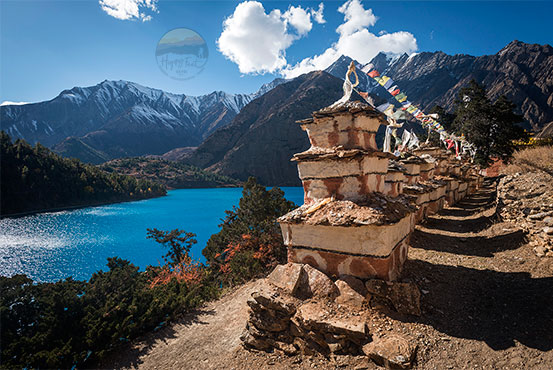
About Dolpo
Himalayas Best-Kept Secret: The Last Pure Tibetan Culture on Earth
Dolpo, in the Far Wild West Himalayas of Nepal, is one of the least-trekked areas of Nepal because of its difficult access, harsh terrain, physical challenge, and high cost; everything costs more to travel here. But those who travel here find purely Tibetan-influenced culture, tradition, and lifestyle simply unique, raising the question of what the whole country of Dolpo must have been like in its time of full life and glory. One commentator has mentioned that Dolpo is the last enclave of pure Tibetan culture left on Earth. Naturally, such things attract travelers, and numerous books and movies about Dolpo encourage people to go there, including the metaphysical discussion in Peter Matthiessen’s book, The Snow Leopard.
The Upper Dolpo Trek generally takes you to the far corner of the vast Dolpo area in Nepal. The largest national park, Shey Phoksundo, with an area of 3,555 sq km, lies in Dolpo and features lovely forests of blue pine, spruce, poplar, deodar, fir, and birch, with juniper and caragana shrubs at higher altitudes. Dolpo is also home to the elusive Snow Leopard, blue sheep, and many other wild mountain animals. Blue sheep and other mountain wildlife are usually spotted grazing on trails, which is rare in other Himalayan regions due to the high flow of trekkers.
The following distinctive nature makes one’s trip to Dolpo a truly transformative experience.
Pure Tibetan Influence: The Upper Dolpo region shares a close cultural and historical connection with Tibet, as it lies near the Tibetan borderline. The Dolpopa people are the ancient-stream ethnic group in this region. They practice Mahayana Tibetan Buddhism and maintain all ancient aspects of Tibetan culture, including language, art, culture, and religious practices.
Geographical Isolation: Upper Dolpo has remained relatively isolated from mainstream Nepali society due to its remote location and challenging geography. Such natural isolation has allowed traditional customs, lifestyles, beliefs, and practices to persist without external influence or modernization.
Buddhist Monasteries: The Upper Dolpo region is home to numerous ancient monasteries, such as Shey Gompa and Dho Tarap Monasteries. These spiritual centers serve as schools, courts for justice, and places of worship and play crucial roles in preserving Buddhist teachings, rituals, and social harmony, a unique property of the area.
Traditional Livelihoods: The local economy is based on animal husbandry (mainly yaks and sheep), traditional farming, and trade with neighboring Tibet, which also extends to India during winter months. Ancient farming methods have been passed down for generations, unaffected by modernization. To this day, many Dolpopas knit and weave their traditional costumes at home using manually spun thread from sheep and yak wool and ancient looms.
Festivals and Rituals: The Saga Dawa festival is one of the most important annual celebrations that reflects the deep-rooted spirituality of the Dolpopa community. Such and other calendar events often feature colorful processions, religious mask dances, traditional music, folk dance performances, and rituals, highlighting their long-rooted rich cultural heritage.
Artistic Expression: Upper Dolpo showcases distinctive artistic expressions in thangka paintings, wood carvings, and handicrafts deeply intertwined with Buddhist themes and local traditions.