Highlight
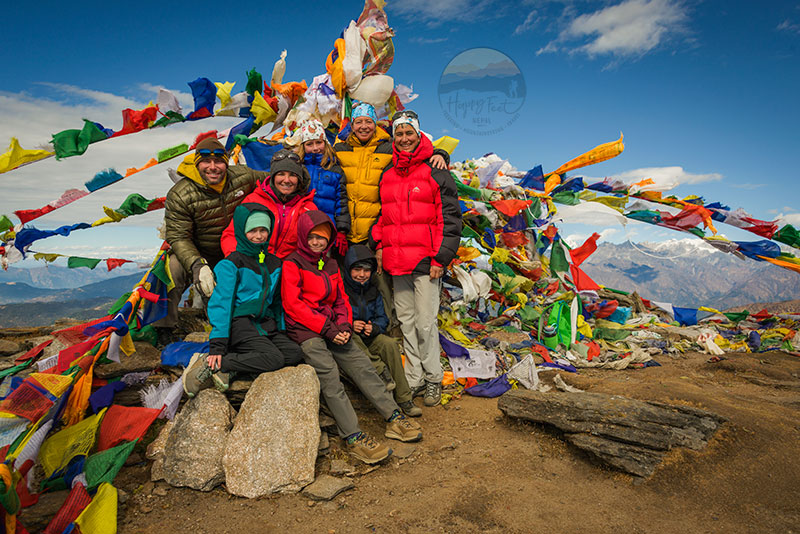
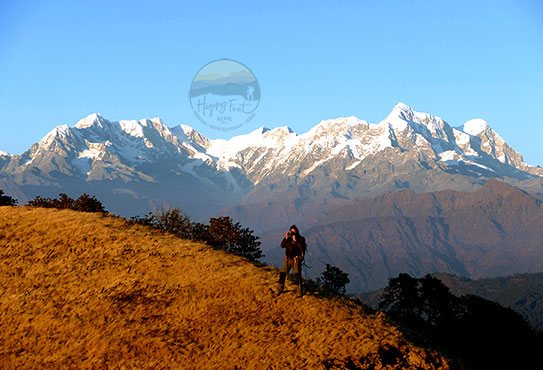
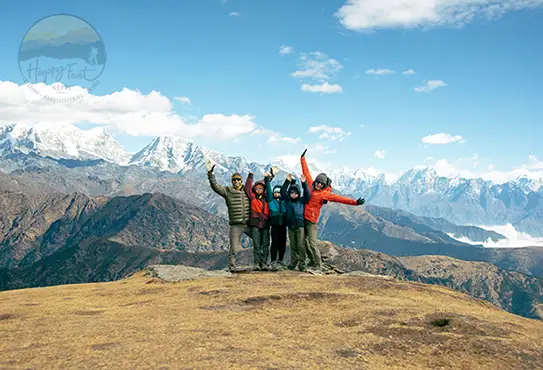
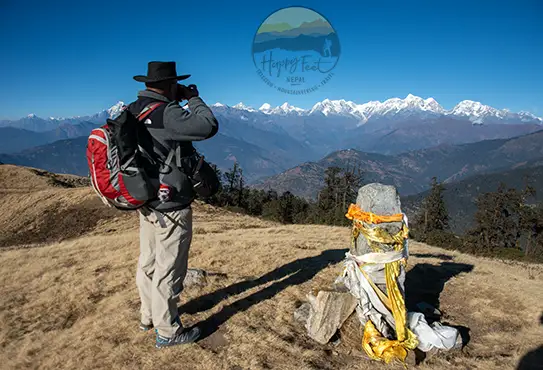
Enjoy the most expansive range of fauna, flora and ethnic cultures in the backdrop of giant Himalayan peaks in a short Classic Peekye Trek. Enjoy a great trekking experience in the Peekye Region, one of the most beautiful areas and still mostly off the tourist route. Stand on the Panoramic Peekye Top at 4065m and see Kangchenjunga to the east to Dhaulagiri to the west of Nepal! See Mount Everest in its full scale from many parts of the Panoramic Peekye Trek Itinerary from beginning to end. See the varieties of rhododendron flowers (early March-May) and birdlife of the Peekye Region. The Classic Peekye Trek area is also home to rare wildlife, including snow leopards and Red Pandas!
The Classic Peekye Trek, Pattale Dhap to Junbesi Trek begins from Pattale Dhap, located within a distance of 240 kilometres east of Kathmandu and reaches after a 7 to 8-hour drive. The Classic Peekye trek ends at Phaplu, the headquarters of the Solukhumbu district. Phaplu is 290 kilometres east of Kathmandu, from where we will take a short flight or a long drive back to Kathmandu.
The Panoramic Peekye region is a newly recognised area that retains more traditional characteristics, filled with natural beauty and authentic cultural villages, making it an exceptional and not-to-miss destination in Nepal. Peekye is one of the easiest and most beautiful trekking in Nepal.
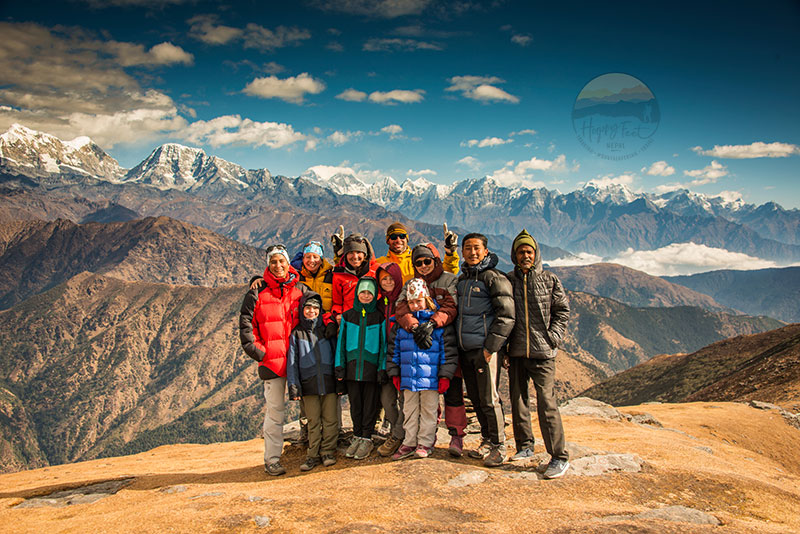
The Classic Pattale Dhap – Peekye – Junbesi trek is ideal for those who want to experience trekking in the Himalayas but lack time or are willing to travel with families and kids yet fear the altitude. The Peekye region is also suitable for expert trekkers, who can combine it with Dudh Kunda Trekking or Dudh Kunda to Lukla Trekking, as well as other extraordinary trekking trails that stand out from others in the Everest region.
Arrive in Kathmandu, clear customs and immigration formalities, and claim your baggage, which takes some time. Upon arrival, receive a traditional welcome from a Happy Feet Mountaineers representative, then transfer to the hotel. Arrive at the hotel, and the rest of the day is free, with optional excursions (not included), or you can ask to organize any of the tours or stroll through its vibrant streets.
Kathmandu, the capital and heart of the country, is home to three medieval cities that symbolize everything in Nepal. Having lived through several Buddhist and Hindu ruling dynasties, the culture and society of Kathmandu Valley have evolved to give it more than just a unique feature. Today, it is an urban city, still rapidly growing, with its ancient myths and testimony to the greatness of the people who have lived there for time immemorial.
Breakfast at the hotel. In the morning, visit Swayambhunath, located on a lovely little hill to the northwest of the city centre, which is the most sacred Buddhist site. The self-originated shrine is believed to have been built in its current form around 250 B.C. The stupa, painted with a pair of the Buddha’s all-seeing eyes, stands on a lotus mandala base on all four sides. The site offers a complete view of Kathmandu Valley, its surroundings, and the Himalayas to the northeast.
In continuation, drive to Patan, one of the three medieval cities of Kathmandu valley and one of the World Heritage sites among the seven World Heritage sites of Kathmandu valley, located 7 kilometres south-west of Kathmandu. The city of Lalitpur, the City of Arts, was a renowned Buddhist centre in Asia, with four Ashok-built stupas and a multitude of miniature stupas, monasteries, viharas, and temples. At Patan, we visit its Durbar Square, the Golden Temple, Thousand Buddha, and its museum, among other sites, which explain Buddhism and Hinduism in extensive labels within the living traditions and context.
In the evening, visit Durbar Square in Kathmandu, an example of the urban architecture of the Malla dynasty, with 19-storey buildings, temples and palaces, and the residence of the living goddess Kumari. Kathmandu Durbar Square, the old palace complex that houses a mass of temples and palaces, including the Gaddi Baithak Durbar, constructed in 1908; the Basantapur Durbar, or the old Royal Palace; and the Kumari Chowk, the residence of the Living Goddess. Basantapur is amongst the most attractive sites in the bustling centre of Kathmandu, and a western traveller around two hundred years ago wrote that there were more temples than houses and idols than people in its city. Lying at the heart of Kathmandu, Durbar Square is a UNESCO World Heritage Site and a must-see. The individual buildings, palaces, and temples feature intricately carved doors, lattice windows, and struts adorned with mythic and erotic figures.
Finalise with a tour and a rickshaw ride through the old city market centre, the Ason Bazaar, seeing what the Nepalese people buy and sell in their daily lives.

A 7 hour’s drive.
We will take a long day’s drive of about 8 hours. It is long not because of distance but because of the road condition that does not allow the Jeep to roll faster. The road to our destination goes through a beautiful river valley and a view-filled ridgeline of Okhaldhunga Hill. Today, we stay at Pattale Dhap, 240 kilometres east of Kathmandu, the trek starting point. Beautiful views of the Himalayan range to the northeast include Karylung, Khatanga, Dudh Kunda, Thamserku and Everest. The first night stop at Pattale gets rewarded with several beautiful views of Everest, including the sunset. The areas are the home of the Sherpa and Magar communities.
A 5-hour trekking
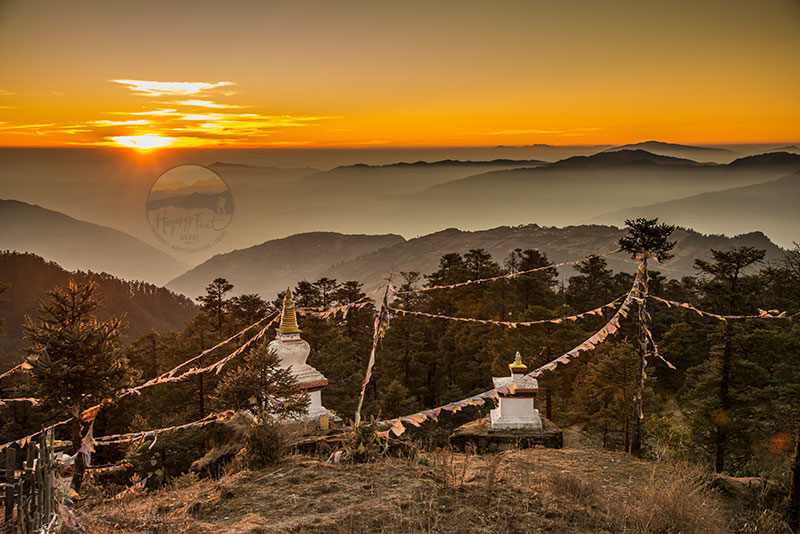
Try to wake up earlier to enjoy the sunrise views from your hotel window or enjoy the widest panoramas with sunrise colours from around. Before breakfast, we will visit the Changesthan Temple above the Dhap, the region’s highest point with fantastic views. Pattale, or the Changesthan, has one of the best views of Mount Everest, including sunrise. Return to the hotel, have breakfast, and start a beautiful, easy walking trek.
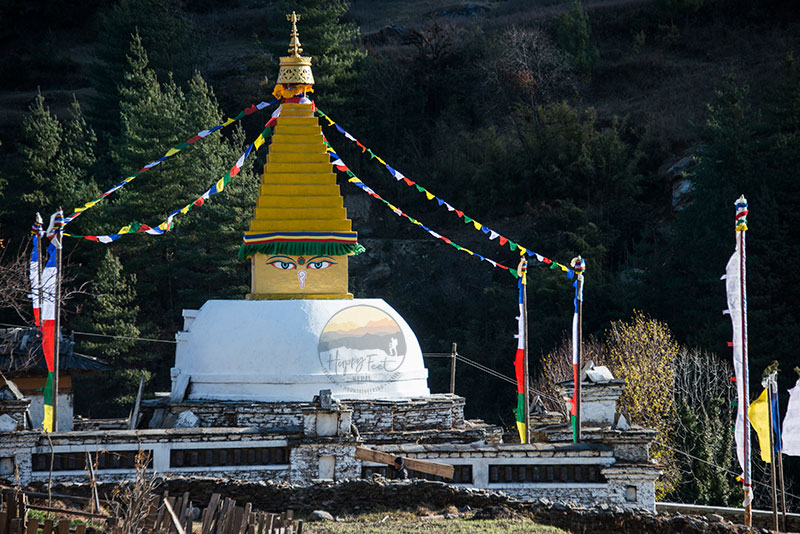
The first day of trekking starts mostly through a ridgeline, the borderline dividing the Okhaldung and Solukhumbu districts. For lunch, reach Singane with eight houses. The main old village of Singane is further 30 minutes further down to the east from the new Singane Village. The newly constructed motor road has destroyed many sections of the ancient trail and requires you to walk on them, but only the occasional Jeep may be seen. The east and west of the ridgeline are the Sherpa villages of Kerung, Dalda Kharka, Gora Khani, Garma, Chyangba and Salleri. The new Singane village is developing for teahouse business for tourists and local passers-by. After Singane, the trail climbs gently north and arrives at Tadapani at 2900m, another best viewpoint ridgeline, to enjoy the Himalayan scenery. After Tadapani, it is another 20-minute walk to the village of Japre, a tiny village with a small monastery, mani-wall and a stupa at 2920 metres. Japre lies above a deep valley with lovely views of Mount Everest and Mount Numbur range, where we will spend our overnight.
A 6 hours trek.
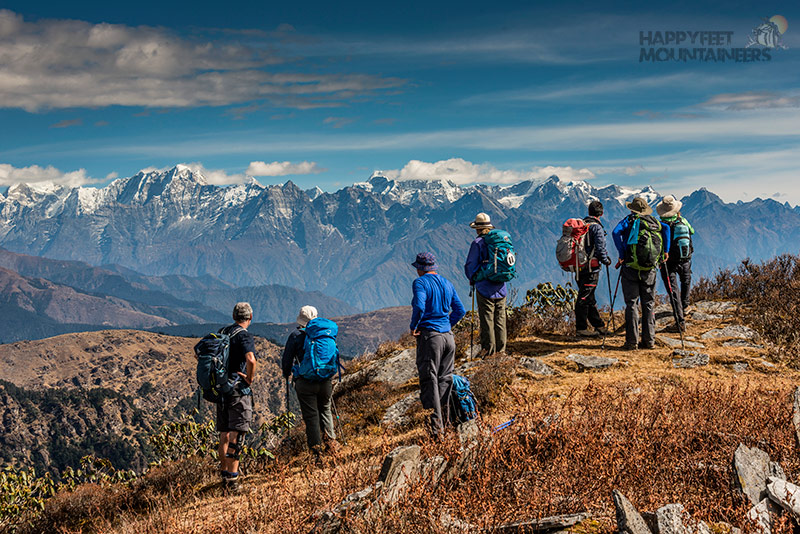
From Japre, the trail enters into tall pine and rhododendron trees and climbs up through a grassy ridge until Rakhop Dalda at 3,372 metres above sea level, a beautiful open view towards Mount Everest, including Makalu and Kanchenjunga and Karylung range. From here, a trail splits to Tolaka Monastery to the west in a distance of 40 minutes, walking through a beautiful rhododendron forest. Further continuing, about an hour, we reach Bulbule at 3500 metres with a single basic lodge. Most of the path offers an excellent view of the Mount Everest range, better than many vantage points of the Everest region trek. Just after leaving Bulbule, the trail splits to Taklung and Peekye. We turn right to Peekye, passing several Yak herders’ Shades, a giant stupa and mani-wall surrounding the Stupa at Lhamochhe with two teahouses. From Lhamochhe, the trail contours a beautiful forest and cliff trail. The view toward the northeast and lower valley filled with Dimbile and Gora Khani villages is open. The trail exits from the pine and rhododendron forest at a big meadow with a long mani-wall and a stupa at Samsingma. If we trek in March-May, the whole area is an open garden with many kinds of rhododendrons in bloom. The rhododendrons in the Peekye region remain in colour from the end of February to September, with different species varying in every slight altitude difference. The highest-elevation plant of this species produces a unique scent, and the Sherpas use it as the most sacred incense; the flowers and plants are similar to azaleas. As we come over the forest to Samsingma 3500m, the Peekye is only at a distance of two hours, and the landscapes are stunning as it starts offering views of the western part of the Himalayan range!
Finally, there will be a gradual hike to Chhyamdingma (Peekye Base Camp). You will first reach a group of lodges, cross them, and walk 15 minutes further, and you will be at Chhyamdingma. From our lodge at Peekye, there are fabulous sceneries to enjoy toward the south and west, including the most significant Himalayan chains on the north-western horizon. Chhyamdingma, our overnight place at Peekye Peak Base Camp, means dancing meadow between two water springs. Peekye is a sacred mountain deity; several holy sites and caves exist. At Peekye, there are also two water springs, male and female, called Menjyang Chhu (medicinal water), one just by the Lodge at Peekye (female) and another on our way Jasawarngyang (male). The local visitors collect the water in small bottles and take it to their homes as sacred water and gifts to their elders and loved ones. Chhyamdingma must have been a lively place in its heyday when each Sherpa household from surrounding villages owned her nak/yak to graze here and a place of joy, organizing daily communal dances! Still today, the lodge owners offer their guests a chance to dance to their cultural music, damngyen (Tungna in Nepali). The site is a lovely meadow with several stone huts for cow shades.
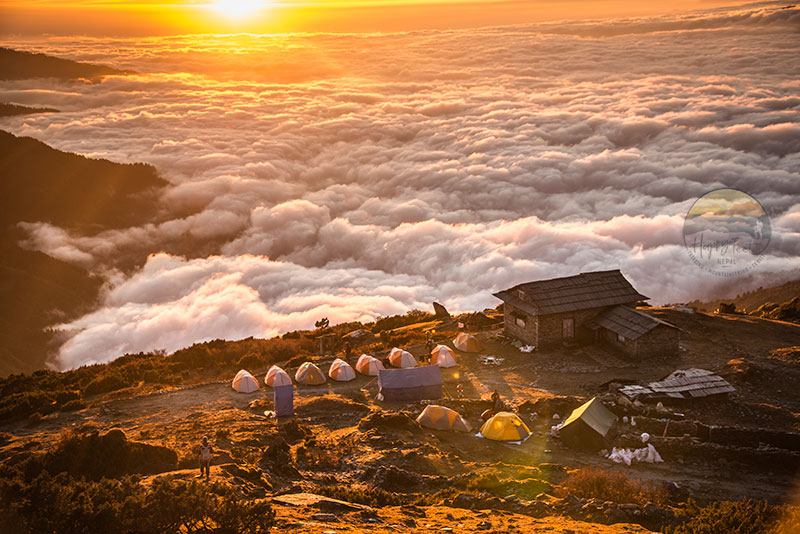
The sunset view from the lodge at Peekye is unlike any of Nepal’s other sunset viewpoints, as it dips behind the mountains further west of Kathmandu. However, from the top of Peekye, sunrise and sunset are breathtaking, so one should wake up early to view the beautiful changing colours on every mountain summit!
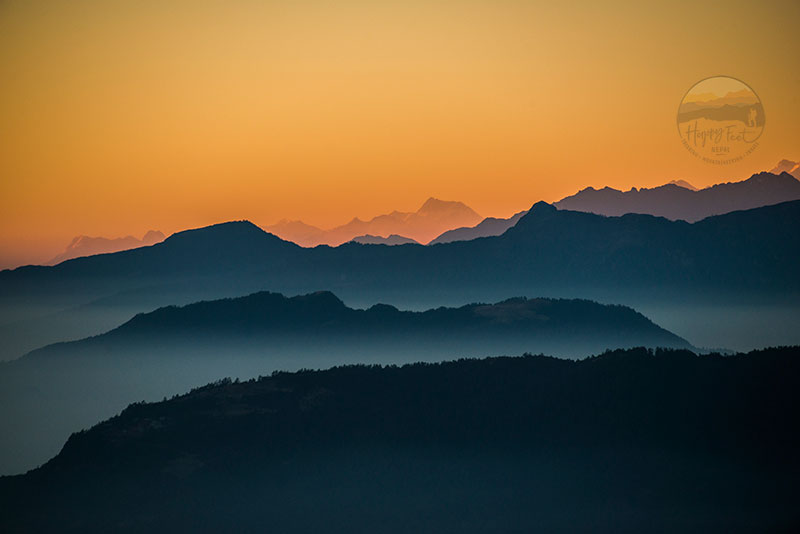
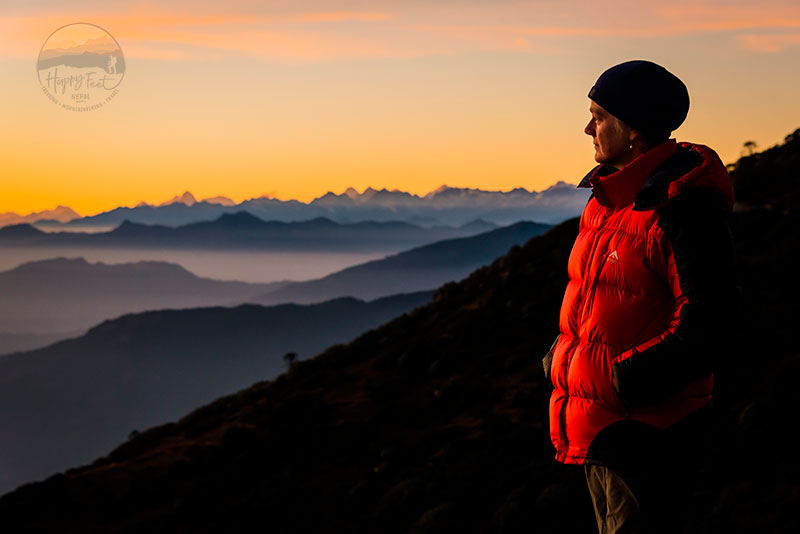
Sunrise excursion to Peekye Lookout. The trip begins around 5 a.m. and takes 45 minutes of gradual climb, but the Himalayas’ views to the west are open from the beginning. As the eastern horizon brightens, the first ray of the sun lands on the summit of the Himalayas, changing the colour of the top of Everest from black to gold and silver and continuously, the other giant mountain tops such as the Kanchenjunga, Makalu, Manaslu, Annapurna and Dhaulagiri! The panorama stretches with countless hills toward the west and south, depicting an invisible horizon, just amazing and indescribable in words with any effort. Return to the lodge, have breakfast and rest. The views from your lodge are open and no less stunning, including the sunset viewing from your dining!
Therefore, we recommend spending two to three days’ rest or a busy day strolling around Peekye. The natural setting offers great sceneries of dazzling summits extending from Kanchenjunga to the east to Dhaulagiri to the west.
A 4-hour trek.
A leisurely wake-up, have breakfast and continue the trek. The trail descends south through the Himalayan Juniper Forest with great views of the lower valley and reaches Torsa, a small meadow with several Yak Shades. Then the trail traverses west and descends through a lovely pine forest to Ngohur Cheese Production Centre. Visit the cheese production centre; the manager may invite you for a cup of tasty tea. If available, buy a small roll of cheese to enjoy during the rest of the trekking days.
Further, continue crossing a stream and reach Ngohur, once an important religious centre, many ancestors of the Sherpas of Goli and surrounding, including Ramechhap and Okhaldunga, came to meditate in this Peaceful and beautiful place. Unfortunately, most of the meditating hermitages disappeared in the past century, and the only surviving monastery was grounded to rubble by the powerful earthquake of 2015. These days, one can only see the ruins and some of the neighbours living there. Ngohur is situated on the top of a lovely hill, and the view towards Tseringma (Gaurishankar) and Dudh Kunda Himal is spectacular. Visit the ruined site and enjoy the sceneries, stop for lunch and continue the trek to Jasawarngyang.
The trail gradually climbs to the northeast through a dense pine and rhododendron forest and arrives at Menjyang Chhu. Peekye is a sacred mountain deity; therefore, several holy sites and caves exist. At Peekye, there are also two water springs, male and female, called Menjyang Chhu (medicinal water), one just by the Lodge at Peekye (female) and another on our way Jasawarngyang (male). The local visitors collect the water in small bottles and take it to their homes as sacred water and gifts to their elders and loved ones. Next, we cross several Yak Shade meadows, traverse a beautiful forest line, and arrive at Jasawarngyang. Jasawarngyang is a strategic hill saddle between the two valleys with two teahouses.
A 5 hour trek.
From here, a trail gradually climbs to the north through Juniper scrub and makes a beautiful traverse under a cliff, reaching a lovely meadow at Pambuk. There is an imposing Chorten, Yak huts and superb views of the Himalayas and the valley to the southeast and Peekye. Then descend through lovely tall pine and rhododendron trees to Taktot, a beautiful open area with basic teahouses. Further, continue to the northeast through the Taktok village with views of Salung, Tumbuk (misspelt to Toamfuk = bear cave) and Chiwang monastery and reach Junbesi.
Junbesi is one of the ancient settlements of the Sherpa people at an altitude of 2675 metres above sea level. With some Sherpa architectural buildings, a monastery, school, health post, Police check-post, and stupa, this village is among the most preferred resting places for many trekkers. In this pretty valley, there are several monasteries, and the Thupten Chöling is one of the significant and active religious centres.
A 4 hours excursion.
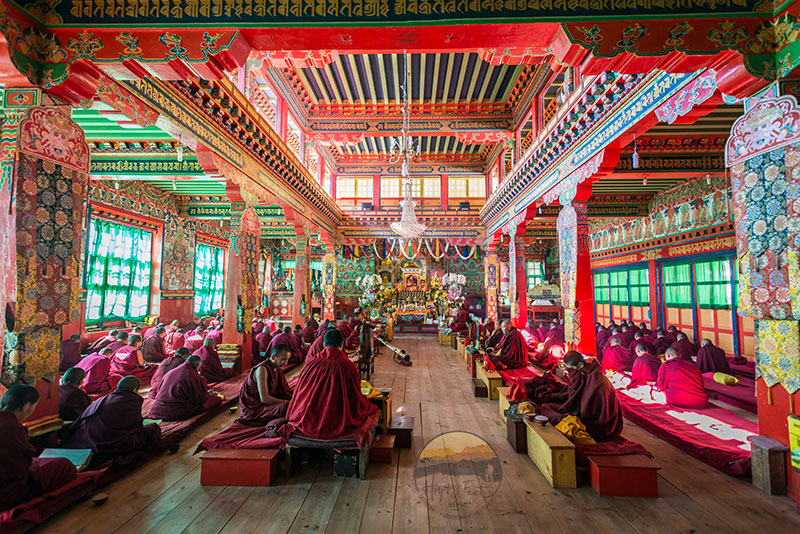
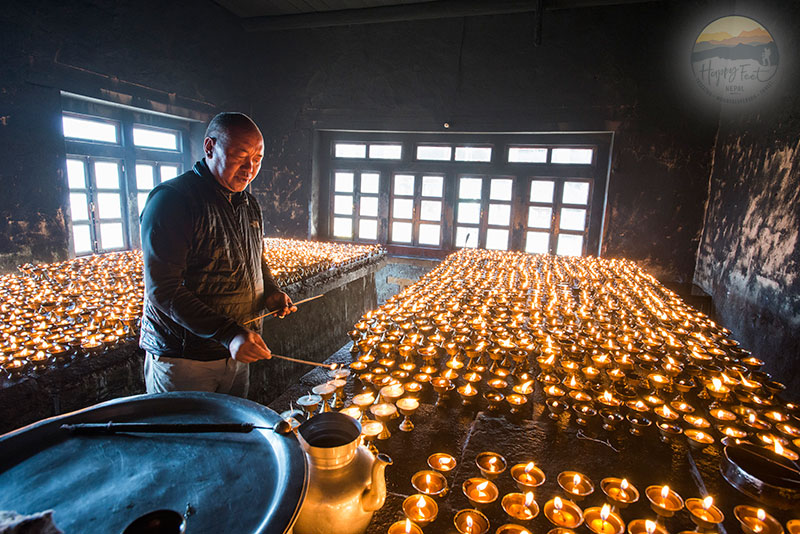
This morning, visit the Junbesi monastery, the region’s oldest monastery. Then, take a beautiful excursion through scattered villages, following the Shyung Chhu (Shyung water/river)to Thubten Chöling monastery, founded by Trulshik Rinpoche, one of the great Nyingmapa Masters. Thupten Chöling lies under a sheer cliff, facing southeast, and it is home to hundreds of monks, nuns, and retired elders meditating here. Visit the monastery, meet with monks, get invited with salt tea, offer some butter lamps, make your wishes, if any, and walk back to Junbesi for a late lunch. The rest of the day is leisurely, optionally visiting its school, health post and village.
A 5 hour trek.
Before starting the trek, visit the monastery of Junbesi, one of the oldest monasteries in the entire region, if you did not see it yesterday. Then, cross the river immediately after the village, walk through a pleasant rhododendron and pine forest, and descend through Sherpa villages, following the river downhill to Beni. At Beni, cross a suspension bridge and take a gradual ascent through a sparse forest and villages to Chiwang Monastery for a lunch stop and visit. Chiwang monastery sits on a sheer cliff, enjoying the 360-degree views of the surrounding; the scenery toward Phaplu airport, surrounding villages and Peekye top are lovely. The monastery is the second most active monastery in the region and is a monastic school. We visit the monastery’s surroundings, enjoy the views and have lunch with tiny monks! In the afternoon, a pleasant walk down to Phaplu, the ending point of our trek! Phaplu is the headquarters of the Solukhumbu district. On Saturdays, a significant market takes place at a spot a 30-minute descent below it. Phaplu is a small Sherpa town with an airport and a hospital built by Sir Edmund Hillary.
If we arrive on the right day, Saturday or Monday, we will take a regular flight the next day; the flight get operated only twice a week. If we arrive on other days, we take a long but scenic Jeep drive to Kathmandu, completing our circuit at Pattate Dhap. The driving takes 9 hours!
Breakfast at the hotel and drive to Pashupatinath Temple. A pagoda Hindu temple with gilt roofs, carved with silver doors dedicated to Lord Shiva, situated at the bank of the holy Bagmati River, and regarded as among the most sacred temples of the Hindu religion, Pashupatinath is the focus of pilgrimages culminating on the day of Shiva Ratri (the marriage anniversary of Lord Shiva and the goddess Parvati). Pashupati is also the cremation ground in the ghats (cremation group) along the bank of the River Bagmati, where the recently deceased Hindus of the Valley are cremated.
Then take a 13-kilometre drive to Bhaktapur, east of Kathmandu. Its original name is Bhadgaon, or the village of Devotees, which is one of the living museums of Kathmandu Valley. Bhaktapur is filled with the 55-windowed Royal Palace, the Palace of the Kumari, the temple of Taleju, the temple of Pashupati, the main square of Taumadhi Tole, Nyatapola Temple (the most imposing and tallest such architecture in all of Nepal), the temple of Akash Bhairab (the second most important temple of Bhadgaon), the Dha Hateya and the Square of the Potters. UNESCO recognises Bhaktapur as a World Heritage Site.
In the evening, visit the Boudhanath, the largest Buddhist shrine in the Kathmandu Valley. This ancient Chorten was built in the 5th century A.D. by King Manadeva. A series of three terraces leads up through water, fire and air segments to the pinnacle, symbolic of space and the highest spiritual attainment. The whole is surrounded by a circle of shops which form a small Tibet. Lord Buddha’s four pairs of eyes flash vividly in the cardinal directions, radiating the message of Mahayana Buddhism, known as Lamaism in Sikkim, Ladakh, Bhutan and Tibet.
Breakfast and the rest of the day are leisure on your own. The representative of Happy Feet Nepal will arrive at your hotel with transport three hours before your departure flight time. Get escorted from the hotel to the International Departure Terminal, see off formalities, and go through the immigration and departure.
The best time is from mid-March to June when most of the day is clear for views, hills and valleys alive with rhododendron flowers, magnolia and orchids in full bloom. But one may encounter occasional short rain in the lower valley and hail above 2,000 metres since it is the time to build up clouds and rain for summer.
September to October is an excellent time to travel here to enjoy the vast greeneries, yak pasturing on high rolling hills, flower-carpeted meadows, spectacular waterfalls and river lines. The lower warm valley turns in full of lush terraced rice fields and mid-hills with maise, millet, potatoes, beans, chilli or everything that grows in their whole allure.
October to December is Nepal’s first best weather time in terms of clear views of the Himalayas, for which Nepal is globally known. Most days are beautiful and clear, with spectacular views of the Himalayas and landscapes. The Peekye is located in such a geographic point, seeing half of Nepal from its many vantage points while going up or returning on your trek, requiring clear weather.
January and February are the primary winter months, and one may find snow and ice in some shaded areas. The temperature at Peekye drop from -15 degree after sunset to sunrise, and the daytime temperature remains 5 to 18 degrees.