Mardi Himal Trek, easy and panoramic trekking in the shade of Annapurna Himalayas and a tour of Kathmandu and Pokhara
Highlights:
Mardi Himal is the least visited area around Annapurna Mountain, away from the main trail and newly introduced. The daily walk involves dramatic scenery of rolling green hills and the high mountain range. Enjoy perfect tranquil surroundings enjoying stunning sceneries, away from villages and into complete wilderness. From low, warm areas to cooler alpine hills with green forest, snow, and ice.
The Mardi Himal trek takes you beyond the busy trails, away from human settlements and villages, to a perfect wilderness of mountains and serene green forests. This trek is suitable for families, school/college groups, and corporate people or best for those willing to experience trekking in the Himalayas but lacking time or willing to travel with kids but fear the altitude. Even if the trekking period is short, the altitude gradually gains and gives perfect acclimatisation to the local climate.
The Mardi Himal trek is amongst Nepal’s shortest and most scenic treks as the Peekye Trek of the Everest region, surrounded by incredible views of the high mountains of Annapurna massive. Trekking starts from lovely and picturesque Pokhara city heading north through high green hills densely covered with tall rhododendron and pine trees, passing traditional farm villages.
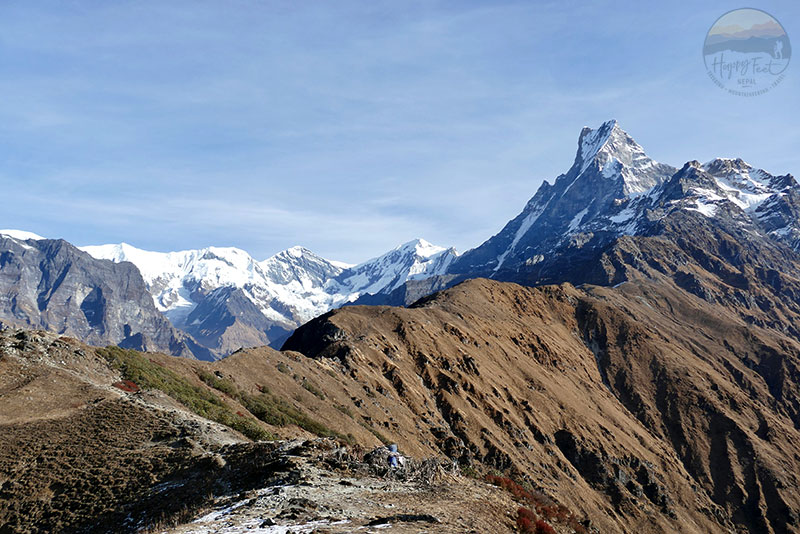
The everyday walk involves a stunning panorama of the Annapurna Himalaya range and its vast valleys through quiet hidden trails to Mardi Himal Base Camp, the trek’s highest point. The Mardi Himal base camp lies beneath the majestic Machhapuchhre Himal, the Fishtailed Mountain, enclosed by beautiful snowy peaks. Then, enjoying grand moments, descend back to low, warm farm areas and catch a short and scenic drive back to beautiful Pokhara.
The Mardi Himal trek is best for those who are willing to experience trekking in the Himalayas but lack the time or are willing to travel with families and kids but fear the altitude.
Arrive in Kathmandu, clear customs and immigration formalities, and claim your baggage, which takes some time. Upon arrival, receive a traditional welcome from a Happy Feet Mountaineers representative, then transfer to the hotel. Arrive at the hotel, and the rest of the day is free, with optional excursions (not included), or you can ask to organize any of the tours or stroll through its vibrant streets.
Kathmandu, the capital and heart of the country, is home to three medieval cities that symbolize everything in Nepal. Having lived through several Buddhist and Hindu ruling dynasties, the culture and society of Kathmandu Valley have evolved to give it more than just a unique feature. Today, it is an urban city, still rapidly growing, with its ancient myths and testimony to the greatness of the people who have lived there for time immemorial.
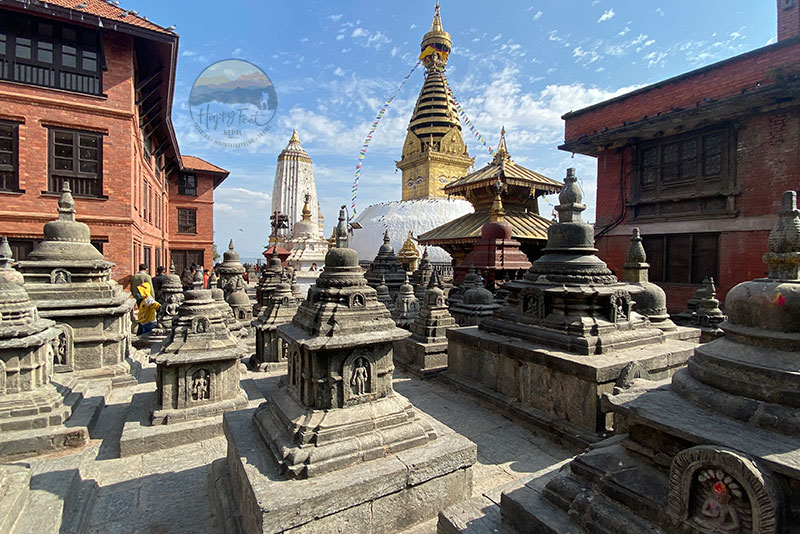
Breakfast at the hotel. In the morning, visit Swayambhunath, located on a lovely little hill to the northwest of the city centre, which is the most sacred Buddhist site. The self-originated shrine is believed to have been built in its current form around 250 B.C. The stupa, painted with a pair of the Buddha’s all-seeing eyes, stands on a lotus mandala base on all four sides. The site offers a complete view of Kathmandu Valley, its surroundings, and the Himalayas to the northeast.
In continuation, drive to Patan, one of the three medieval cities of Kathmandu valley and one of the World Heritage sites among the seven World Heritage sites of Kathmandu valley, located 7 kilometres south-west of Kathmandu. The city of Lalitpur, the City of Arts, was a renowned Buddhist centre in Asia, with four Ashok-built stupas and a multitude of miniature stupas, monasteries, viharas, and temples. At Patan, we visit its Durbar Square, the Golden Temple, Thousand Buddha, and its museum, among other sites, which explain Buddhism and Hinduism in extensive labels within the living traditions and context.
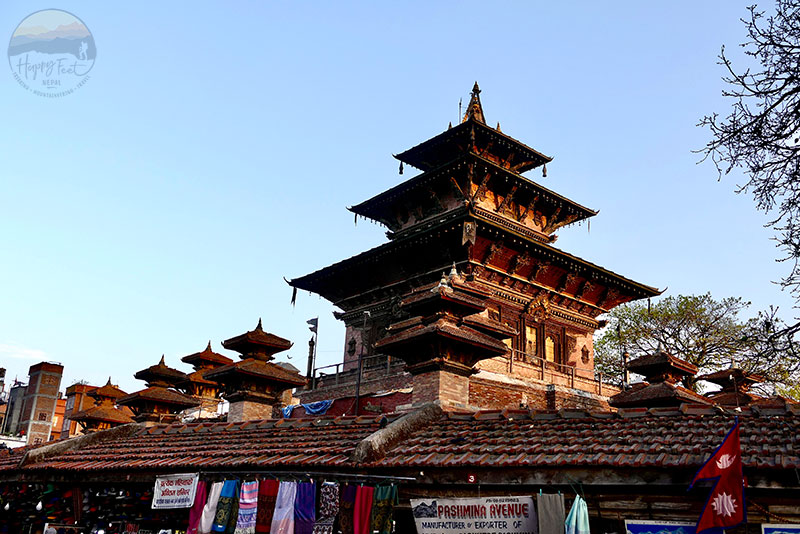
In the evening, visit Durbar Square in Kathmandu, an example of the urban architecture of the Malla dynasty, with 19-storey buildings, temples and palaces, and the residence of the living goddess Kumari. Kathmandu Durbar Square, the old palace complex that houses a mass of temples and palaces, including the Gaddi Baithak Durbar, constructed in 1908; the Basantapur Durbar, or the old Royal Palace; and the Kumari Chowk, the residence of the Living Goddess. Basantapur is amongst the most attractive sites in the bustling centre of Kathmandu, and a western traveller around two hundred years ago wrote that there were more temples than houses and idols than people in its city. Lying at the heart of Kathmandu, Durbar Square is a UNESCO World Heritage Site and a must-see. The individual buildings, palaces, and temples feature intricately carved doors, lattice windows, and struts adorned with mythic and erotic figures.
Finalise with a tour and a rickshaw ride through the old city market centre, the Ason Bazaar, seeing what the Nepalese people buy and sell in their daily lives.

A 25-minute flight, 1-hour drive and 4-hour trek.
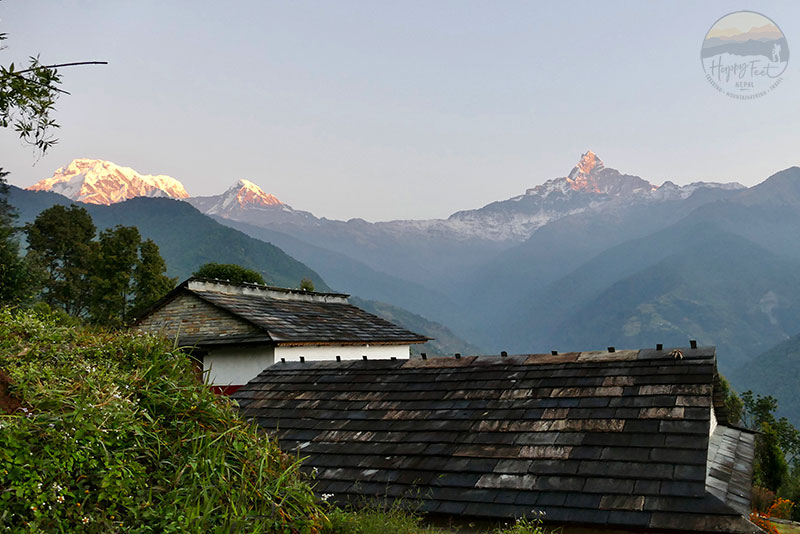
A leisurely day to enjoy the views. From this tranquil spot, the morning starts with a short but steep ascent into the deep woods of rhododendron, hemlocks, oaks, and pine trees, as the walk slowly follows quiet trails through peaceful surroundings to reach a small place in a forest clearing named Low Camp. After a refreshing stop, continue towards the mountainous area where the tree line drops to short alpine bushes of dwarf rhododendron or azalea, junipers, and Burberry, as the walk leads close to Machhapuchhre Himal and Mardi Himal. There is a beautiful view of Mardi Himal, Annapurna South, Hiuchuli, and Machhapuchhre from Badal Danda (Cloud Hill), standing high above the clouds. We stop at Badal Danda for lunch and to enjoy the scenery.
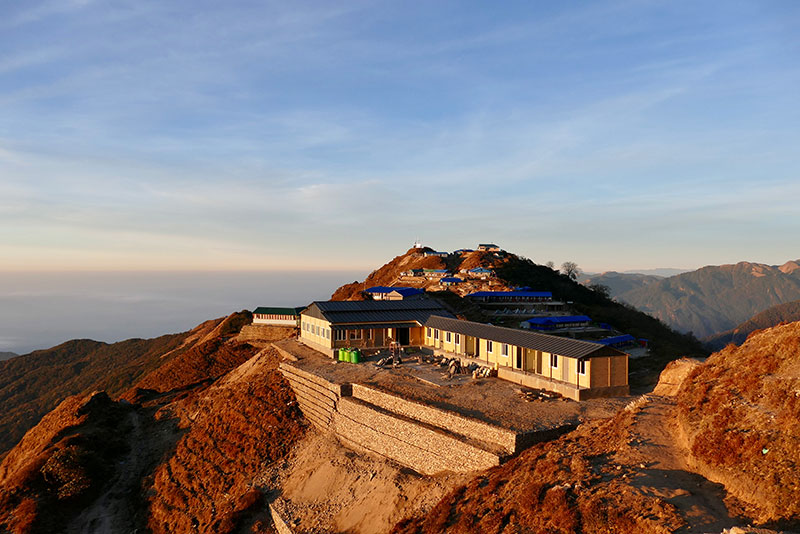
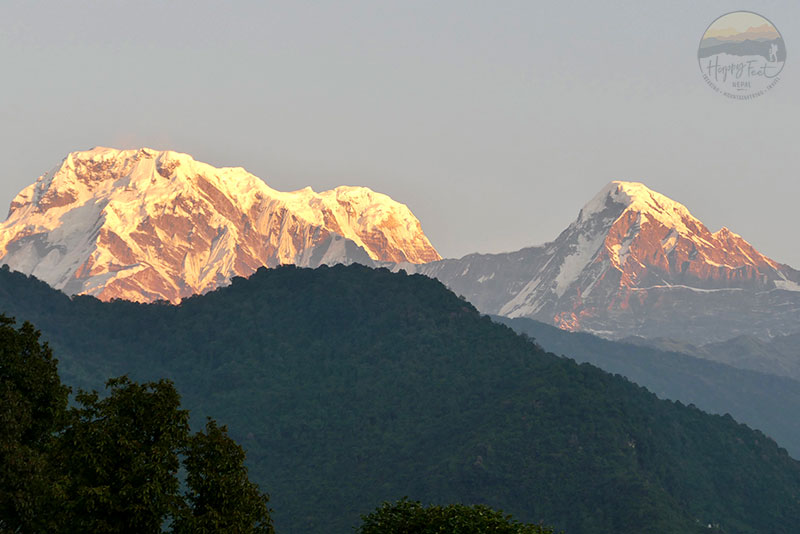
In the afternoon, the trail slowly leads to a high grassy ridge reaching High Camp for an overnight, a scenic spot with few basic lodges. The rest of the day is to enjoy marvellous views of landscapes and snow-capped mountains dominated by Hiunchuli, Annapurna South and Machhapuchhre.
A 5-hour trek.
From Deurali, the trail veers right from the main Annapurna Sanctuary trekking trail, then ascends through a lovely forested area, undulating along a hill ridge, before a steep descent! This is the fundamental nature of trekking in the Himalayas: you climb up, descend, and then climb again! Then climb slowly back into the forest to the ridgeline, reaching Forest or Jungle Camp. The Camp, also known as Kokar, is in the middle of the woods.
A 5-hour trek.
A leisurely day to enjoy the views. From this tranquil spot, the morning starts with a short but steep ascent into the deep woods of rhododendron, hemlocks, oaks, and pine trees, as the walk slowly follows quiet trails through peaceful surroundings to reach a small place in a forest clearing named Low Camp. After a refreshing stop, continue towards the mountainous area where the tree line drops to short alpine bushes of dwarf rhododendron or azalea, junipers, and Burberry, as the walk leads close to Machhapuchhre Himal and Mardi Himal. There is a beautiful view of Mardi Himal, Annapurna South, Hiuchuli, and Machhapuchhre from Badal Danda (Cloud Hill), standing high above the clouds. We stop at Badal Danda for lunch and to enjoy the scenery.
In the afternoon, the trail slowly leads to a high grassy ridge reaching High Camp for an overnight, a scenic spot with few basic lodges. The rest of the day is to enjoy marvellous views of landscapes and snow-capped mountains dominated by Hiunchuli, Annapurna South and Machhapuchhre.
A 6-hour trek.
On this day, take a scenic excursion to Mardi Himal Base Camp, the trip’s highest point, right beneath Machhapuchhre Himal. The day begins with a steep ascent through a hill ridge. The trail is rocky and uneven, and most will find it challenging; it is 18 kilometres to go and back. But the views of Machhapuchhre and Annapurna and the lower valley are rewarding. The scenic trail goes through a narrow ridge before reaching the upper viewpoint and continues to the Mardi Himal Base Camp. The views along the trail and from the Mardi Base Vamp are exceptional. After admiring the grandeur of the Annapurna Himalayas, walk back to your lodge; the scenery along the way is no less stunning.
A 7-hour trek.
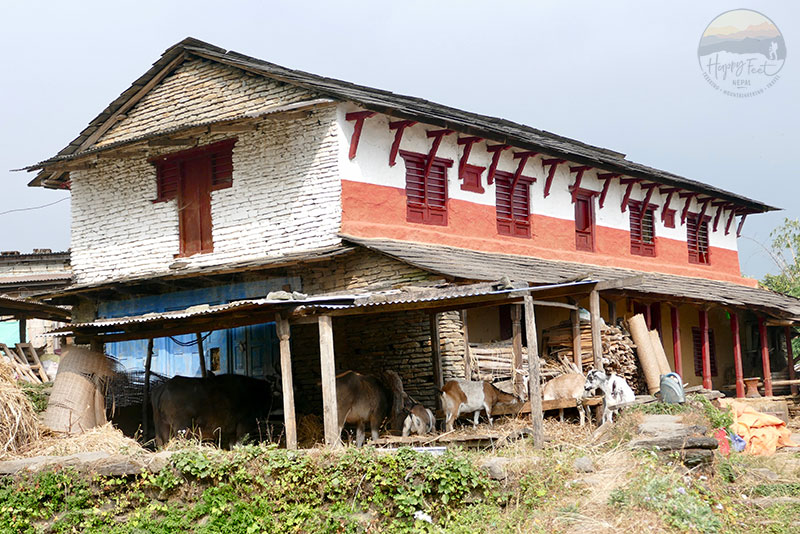
Retrace the trail back to Forest Camp with exceptional views and stop for lunch. Then takes a new path to Ghalel Kalimati through the rhododendron forest full of orchids, traversing a hill slope with views of Machhapuchhre, Lamjung and Annapurna and the Tamang and Gurung villages of Lumre. Finally, reach Ghalel Gurung village, a lovely and authentic Gurung settlement.
A 1 1/2-hour drive to Pokhara.
Ride a Jeep back to Pokhara, meet the Pokhara-Beni highway at Yangza, and stop at the Tibetan refugee camp. A short visit and continue the drive to Pokhara. The rest of the day is for leisure and rest. Lunch and stroll around the shore of Phewa Lake, and choose a restaurant for dinner and overnight.
Breakfast at the hotel and transfer 13-kilometres to Pumdikot, a strategic hill with an ancient fort in ruins and recently converted into a Shiva temple; it is a beautiful viewpoint. The views of Annapurna, Pokhara and the peace stupa are beyond description. From Pumdikot, we take a scenic drive to Peace Stupa, enjoying magnificent views of Phewa Lake, the Himalayas, Pokhara City and its surroundings. The Peace Stupa site is equally beautiful, with splendid views.
The World Peace Stupa stands gloriously on a hill saddle above Phewa Lake and Pokhara City from where you get panoramic views of Phewa Lake, the city of Pokhara and Mount Annapurna and Lamjung (on a clear day). A Peace Stupa is a Buddhist monument to inspire peace in all races and creeds and to help unite them in their quest for world peace. Most of them were built since World War II under the direction of Nichidatsu Fujii (1885-1985), a Buddhist monk from Japan and founder of the Nipponzan-Myohoji Buddhist Order. In 1947, he started the construction of peace pagodas as world peace shrines, and in the year 2000, there were eighty Peace Pagodas built around the world between Europe, Asia and the United States.
Enjoy the landscapes of the site, visit the stupa, explore, go down to the lake shore, cross the lake by little boat, have a late lunch and visit the International Mountain Museum in Pokhara, where we will see and better understand the history of the mountain and mountaineering on the highest peaks in the world. We will understand the importance of the Himalayas of Nepal and the benefits that the Himalayas give to the millions of people and their natural habitat. After the visit, return to the shore of the lake for free time.
Early in the morning, take a short drive to Sarangkot viewpoint to view the best panoramas that Pokhara City offers. The views from the top of Sarangkot offer a 360-degree panorama, including the Phewa Lake, Pokhara city and its surroundings, rimmed by grand snow-capped Himalayas and rolling hills as far as we can see. Then return to your hotel and have breakfast. Finally, in continuity, drive to the airport for a 25-minutes flight to Kathmandu.
Get landed at Kathmandu airport, greeted by the Happy Feet Mountaineers representative, and drive to your hotel in Thamel, which may take 20 to 40 minutes, depending on the traffic. The rest of the afternoon is free.
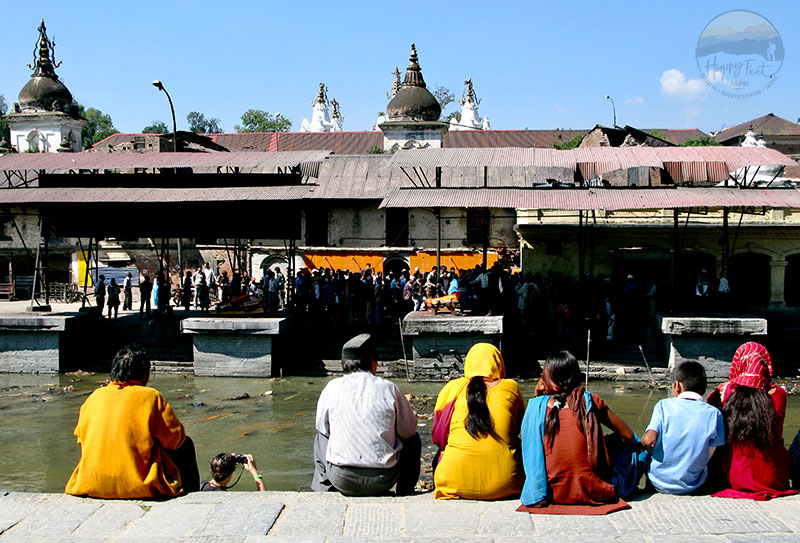
Breakfast at the hotel and drive to Pashupatinath Temple. A pagoda Hindu temple with gilt roofs, carved with silver doors dedicated to Lord Shiva, situated at the bank of the holy Bagmati River, and regarded as among the most sacred temples of the Hindu religion, Pashupatinath is the focus of pilgrimages culminating on the day of Shiva Ratri (the marriage anniversary of Lord Shiva and the goddess Parvati). Pashupati is also the cremation ground in the ghats (cremation group) along the bank of the River Bagmati, where the recently deceased Hindus of the Valley are cremated.
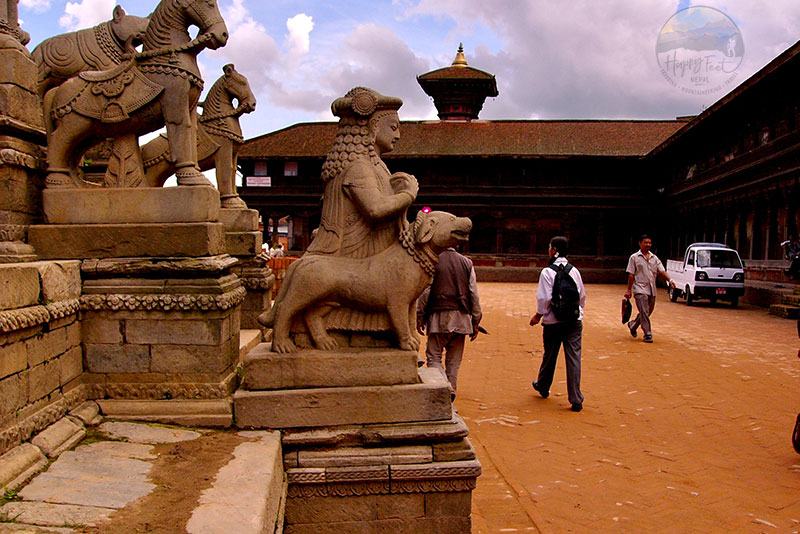
Then take a 13-kilometre drive to Bhaktapur, east of Kathmandu. Its original name is Bhadgaon, or the village of Devotees, which is one of the living museums of Kathmandu Valley. Bhaktapur is filled with the 55-windowed Royal Palace, the Palace of the Kumari, the temple of Taleju, the temple of Pashupati, the main square of Taumadhi Tole, Nyatapola Temple (the most imposing and tallest such architecture in all of Nepal), the temple of Akash Bhairab (the second most important temple of Bhadgaon), the Dha Hateya and the Square of the Potters. UNESCO recognises Bhaktapur as a World Heritage Site.
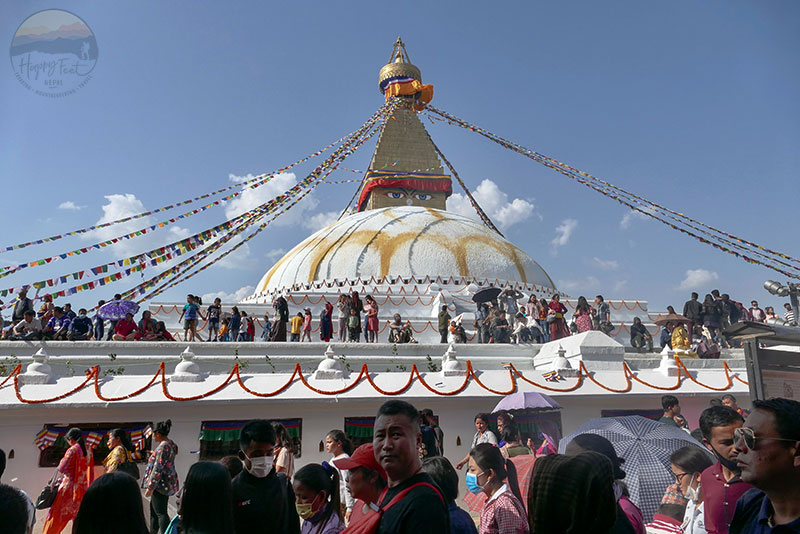
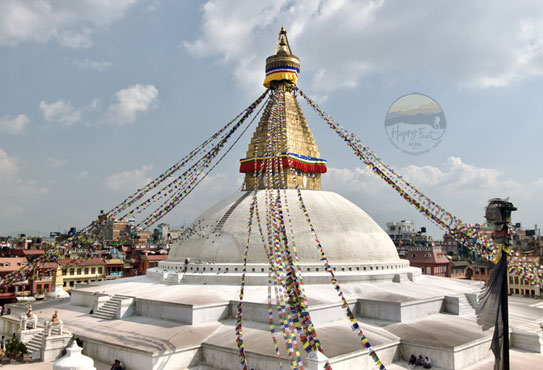
In the evening, visit the Boudhanath, the largest Buddhist shrine in the Kathmandu Valley. This ancient Chorten was built in the 5th century A.D. by King Manadeva. A series of three terraces leads up through water, fire and air segments to the pinnacle, symbolic of space and the highest spiritual attainment. The whole is surrounded by a circle of shops which form a small Tibet. Lord Buddha’s four pairs of eyes flash vividly in the cardinal directions, radiating the message of Mahayana Buddhism, known as Lamaism in Sikkim, Ladakh, Bhutan and Tibet.
Breakfast and the rest of the day are leisure on your own. The Representative of Happy Feet Nepal will arrive at your hotel with transport three hours before your departure flight time. Get escorted from the hotel to the International Departure Terminal, see off formalities, and go through the immigration and departure.
Mid-March to June, the forest remains in bloom with multi-coloured rhododendron, magnolia, and wild orchids and is full of birds. Or from the first week of October to December when the weather remains crystal clear day and night. August-September is the best month to enjoy the luxuriant rainforest full of greenery and to sight the rare highland flowers.