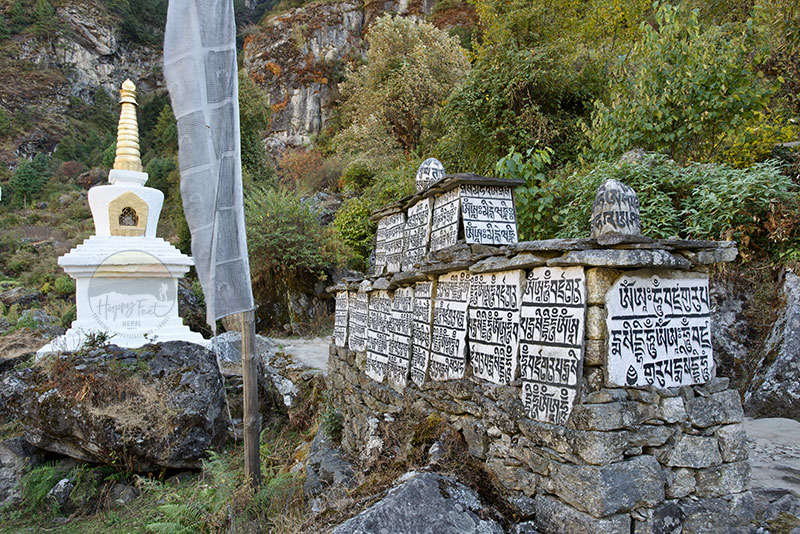
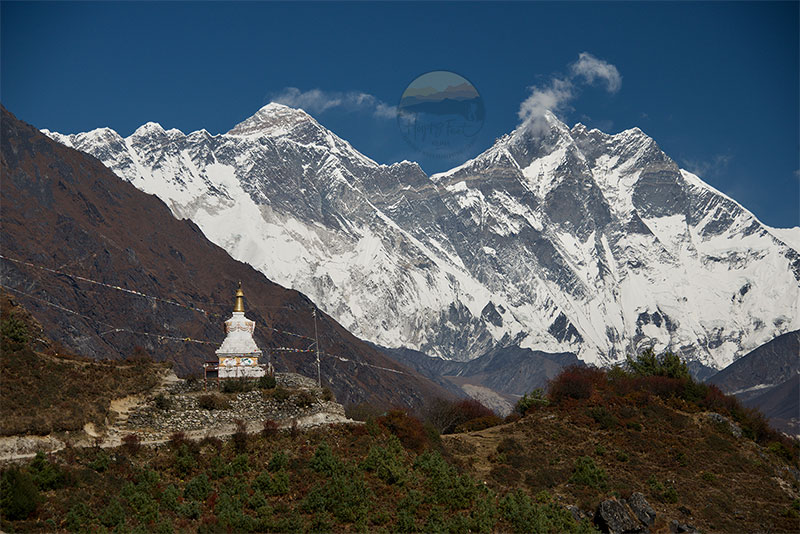
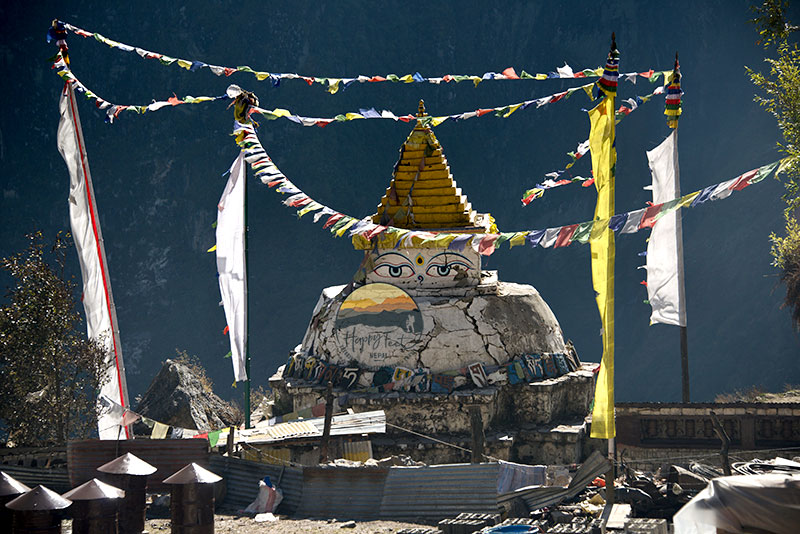
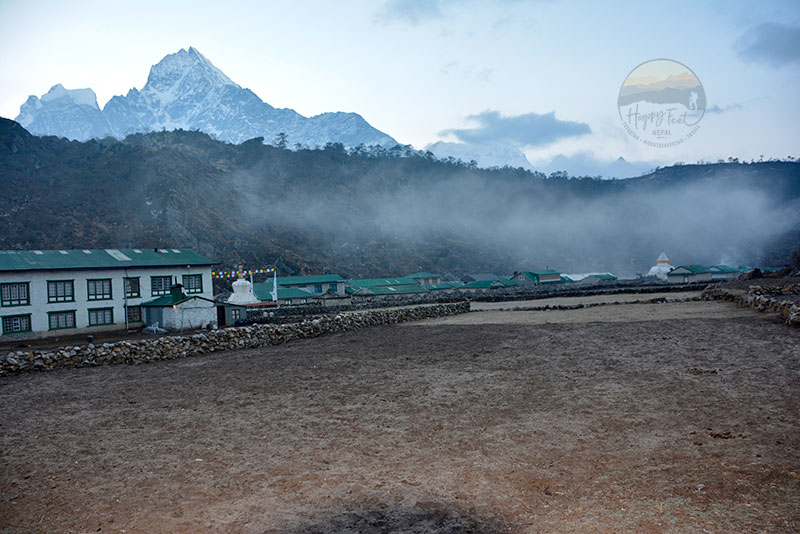
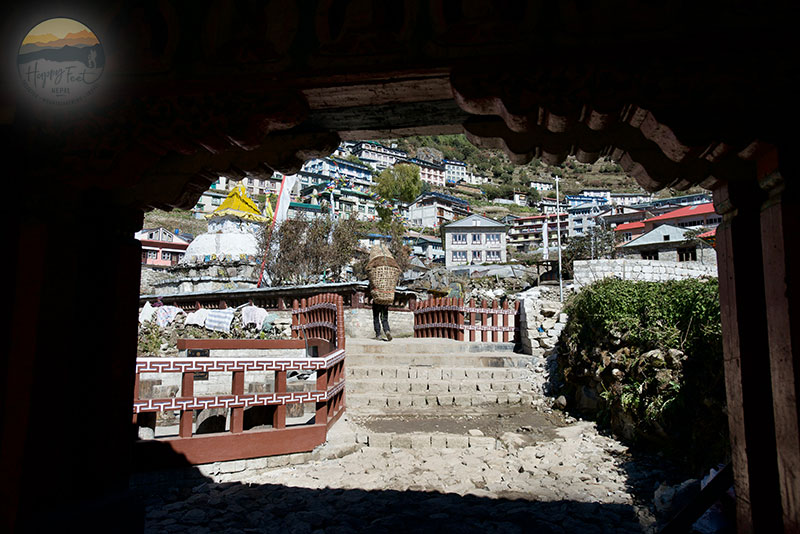
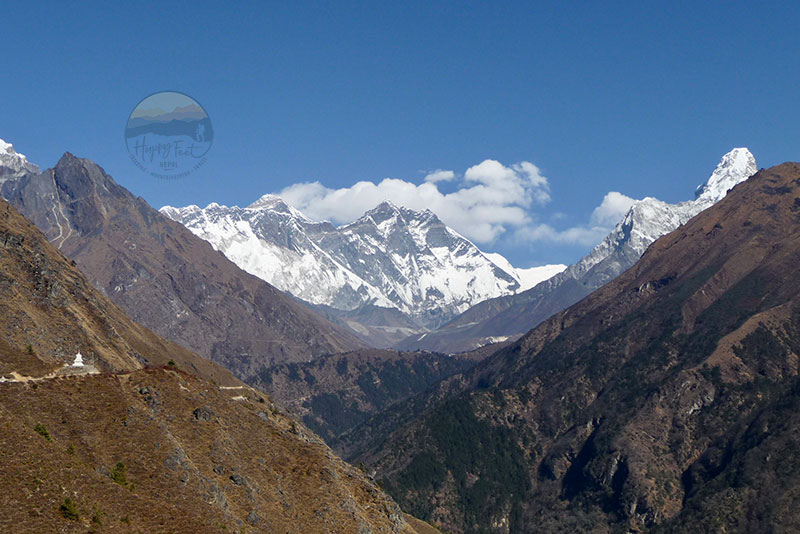
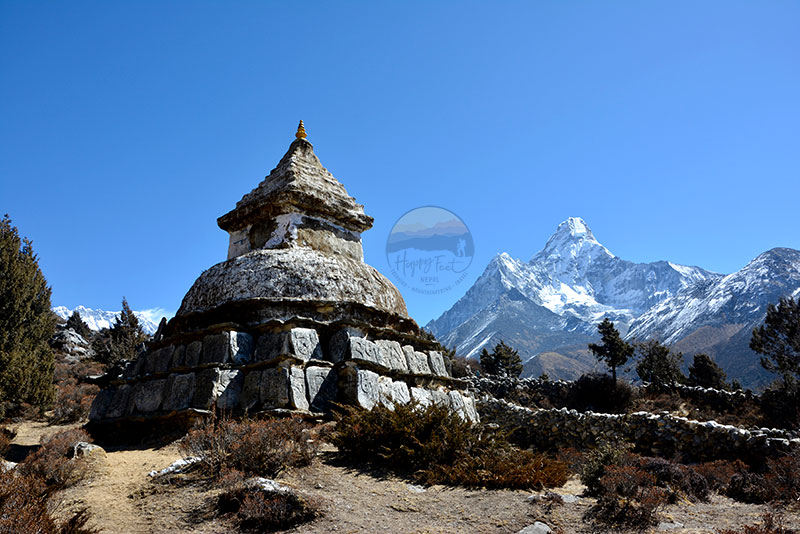
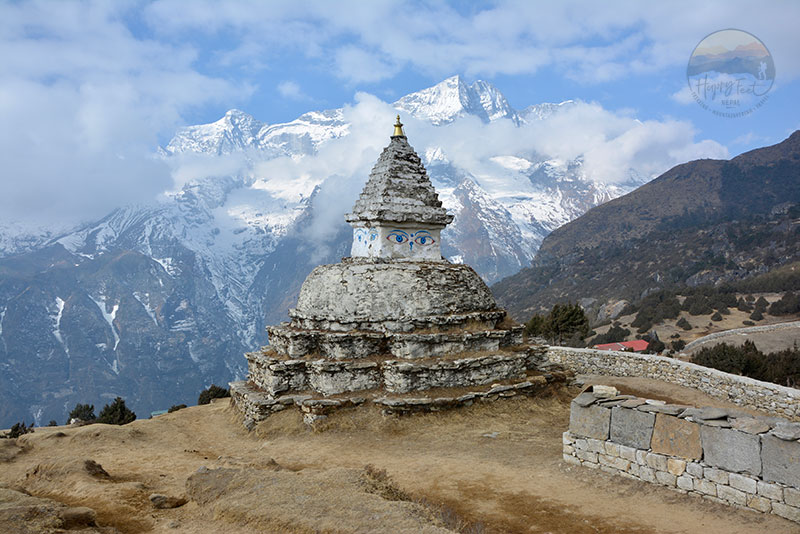
After breakfast, we drive to Swayambhunath. Located on a lovely little hill, Swayambhunath Stupa is one of the fascinating architectural jewels of the country. This Buddhist shrine is said to have been built around 250 b.c. The main feature of the Stupa, the white dome, is identified with the spotless, pure jewel of Nirvana and is crowned by a thirteen-tiered golden spire of conical shape. On the cube at the spire’s base is a pair of the Buddha’s all-seeing eyes, painted on all four sides. The Stupa stands on a typically stylized lotus mandala base, believed to have surfaced (self-originated) years ago from the lake that initially filled the Kathmandu Valley.
From the hilltop, one can enjoy a panorama of Kathmandu and the rest of the Valley. A long stairway reaches the Stupa up the wooded hillside and past statues of the Buddha. But watch out for the monkeys! At the top, you’ll see devotees making rounds of the Stupa, spinning the praying wheels as they go around and around.
Another significant thing to be seen here is a magnificent two-tiered golden temple of Harati, the grandmother deity of children and smallpox, believed to be an Ogress until later converted into Buddhist and to be a great caretaker of the children. The Dewa Dharma Monastery is next to the temple, noted for a bronze icon of Buddha and traditional Tibetan paintings, destroyed by the 2015 earthquake and reconstructed.
The huge gold-plated Vajra, set on the Dharma Dhatu mandala at the side of the Stupa, the priestly symbol of Vajrayana Buddhism, is worth a close look.
Then we head on to Patan, located at a distance of 7 kilometres, once an independent Buddhist city-state and a rival of Kathmandu, separated by the Bagmati River. Patan is also known as Lalitpur, literally the city of the Arts. The old centre has been designated a World Heritage Site by UNESCO.
Patan boasts a multitude of temples and wonders of art in and around its Durbar Square (Palace Square). First, we’ll visit the Royal Palace, which occupies one side of the square, where works of art in every piece of wood, stone, and metal are on exhibition in the open air. We also visit the temple of Krishna, the temple of Jagat Narayan, the Golden Temple and the Temple of Thousand Buddhas, among other sites.
Around the end of the tour, you’ll also visit the Museum of Patan, located inside the medieval palace, which is a must for anyone interested in Asian Art, the history of Nepal, curatorial science, or religion. It is a world-class museum that displays the traditional sacred art of Nepal in an illustrious architectural setting. Its home is an old residential part of Patan Durbar, one of the royal palaces of the Malla kings of the Kathmandu Valley. The gilded door and window face one of the most beautiful squares in the country.
The museum also exhibits a long span of Nepal’s cultural history and some rare objects. For example, Buddhism and Hinduism are explained in detail in extensive labels within the living traditions and context.
In the evening, we visit Basantapur, or the Kathmandu Durbar Square, the old palace complex that exhibits a multitude of temples and palaces. The main attractions are the Gaddi Baithak Durbar (a Palace constructed in the Rana style in 1908), Basantapur Durbar (the main building of the old royal palace), Kumari Chowk (the residence of the Living Goddess) and Kumari Bahal, where the family of Kumari resides.
Some two hundred years ago, a Western visitor wrote that there were more temples than houses and more idols than people in the city. Indeed, Kathmandu boasts one of the largest assemblages of magnificent historical monuments and shrines ever built. Duly recognized as a World Heritage Site by UNESCO, Kathmandu Durbar Square lies in the city’s heart. Locally, it is also called Hanuman Dhoka Palace Square. The fascinating part of this Palace complex is the towering Nine Storey Palace, overlooking the beautiful cityscape and the vast Basantapur Square. In 1768 A.D., King Prithivi Narayan Shah built a mansion to commemorate his conquest of the Valley, known for intricately carved wooden doors, roof struts and massive lattice windows full of mythical figures.
Finalize the tour and exit through Ason Bazaar, an old city centre and market, where one can see and experience a bit of what the Nepalese use in their daily life. Drive to the Hotel.