Kathmandu valley tour
Sherpa Guided tour of the medieval villages of Kathmandu Valley and its scenic and sacred valley rim, including Namo Buddha and seven World Heritage Sites and Panoramic Flight to see the Himalayas.
Trip Highlight:
Guided Tour of Kathmandu Valley, visiting seven World Heritage Sites by UNESCO. Visit Nagarkot and Dhulikhel, the famous lookouts on the outskirts of Kathmandu Valley. Visit Namo Buddha, where Buddha offered his own body for food to the tigress. Fly over Mount Everest, the tallest mountain on the globe.
The valley of Kathmandu was once a huge lake whose waters, according to tradition, were drained with a mighty slash of his sword by Manjushree (the patron god of the Kathmandu Valley). The valley thus became suitable for human settlement. It now contains Nepal’s capital city and is the country’s commercial hub. Still, it retains much of its ancient glory: grand stupas, monasteries, magnificent temples, old palaces and other monuments.
Arrive in Kathmandu, clear customs and immigration formalities, and claim your baggage, which takes some time. Upon arrival, receive a traditional welcome from a Happy Feet Mountaineers representative, then transfer to the hotel. Arrive at the hotel, and the rest of the day is free, with optional excursions (not included), or you can ask to organize any of the tours or stroll through its vibrant streets.
Kathmandu, the capital and heart of the country, is home to three medieval cities that symbolize everything in Nepal. Having lived through several Buddhist and Hindu ruling dynasties, the culture and society of Kathmandu Valley have evolved to give it more than just a unique feature. Today, it is an urban city, still rapidly growing, with its ancient myths and testimony to the greatness of the people who have lived there for time immemorial.
Breakfast at the hotel and drive to Dakshin Kali Temple. The trip to the temple takes about 1 hour by car. The road runs through the famous Chobar Gorge and offers magnificent views over the Kathmandu Valley. Chobar Gorge is where all the water of the Kathmandu Valley exits, initially cut by the Buddhist Master Manjushree with his mighty sword to drain the water that initially filled the Kathmandu Valley. Here, visit an ancient temple and continue the drive to Daktsin Kali. The Dakshin Kali temple should be visited on Tuesdays or Saturdays, as these days are for animal sacrifice in honour of Kali. Next, you will visit the ancient Sanctuary dedicated to the God Shesha Narayan, the sacred cave of Guru Padmasambhava and several Buddhist monasteries.
In the afternoon, drive to Kirtipur, an ancient Newari town with various ancient Buddhist temples and excellent views of the Kathmandu Valley. Kirtipur was an ancient independent Kingdom. Due to their strategic location at the entrance to Kathmandu Valley, they fought several times with the Soldiers of Prithvi Narayan Shah, and their defeat led Prithvi Narayan Shah to unify the current Nepal.
Breakfast at the hotel and drive to Pashupatinath Temple. A pagoda Hindu temple with gilt roofs, carved with silver doors dedicated to Lord Shiva, situated at the bank of the holy Bagmati River, and regarded as among the most sacred temples of the Hindu religion, Pashupatinath is the focus of pilgrimages culminating on the day of Shiva Ratri (the marriage anniversary of Lord Shiva and the goddess Parvati). Pashupati is also the cremation ground in the ghats (cremation group) along the bank of the River Bagmati, where the recently deceased Hindus of the Valley are cremated.
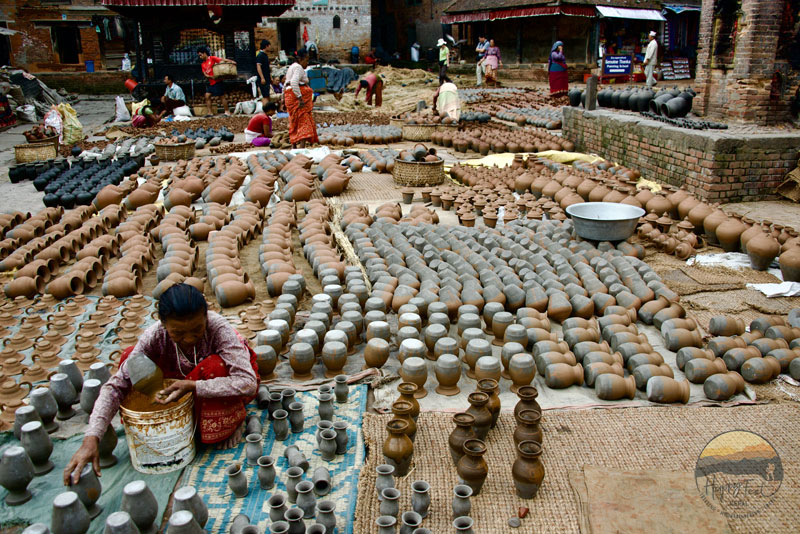
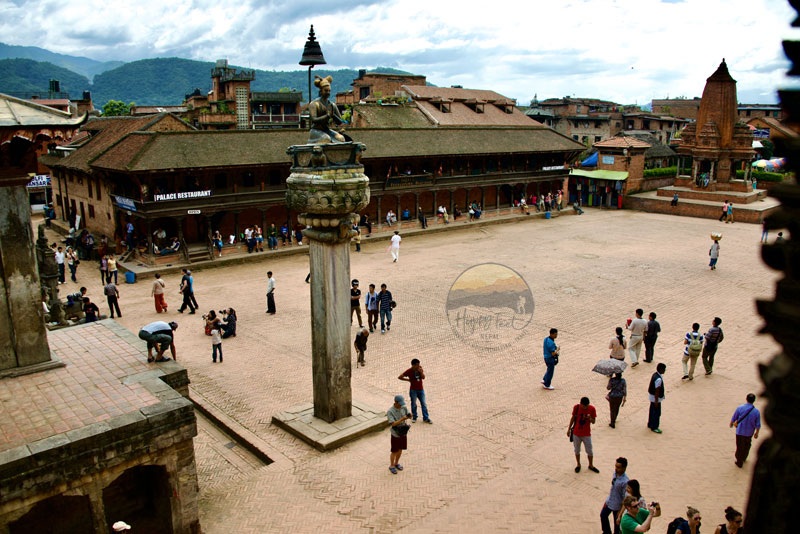
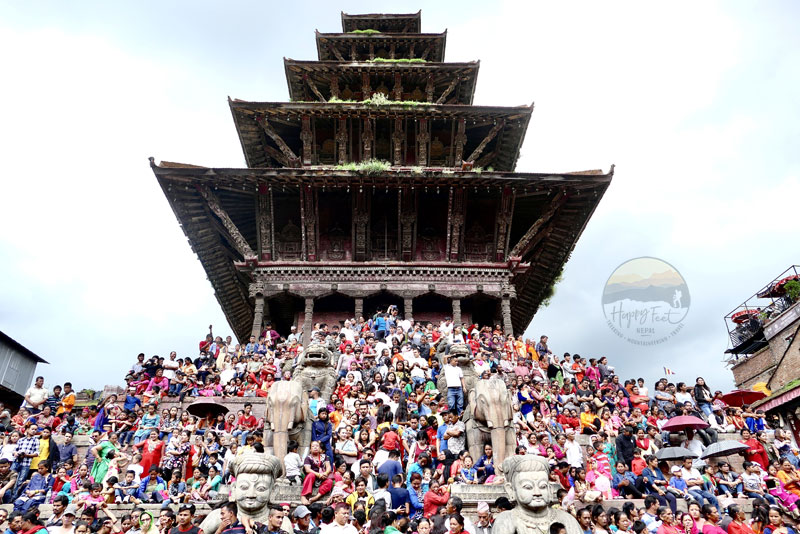
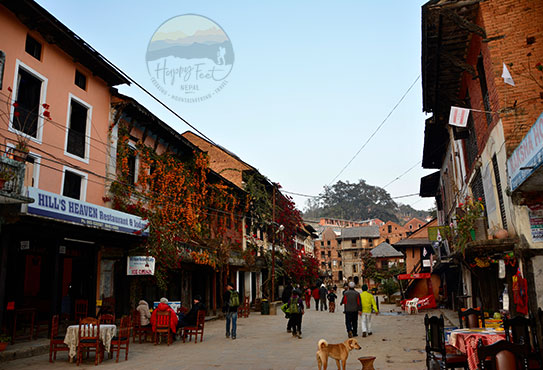
Then take a 13-kilometre drive to Bhaktapur, east of Kathmandu. Its original name is Bhadgaon, or the village of Devotees, which is one of the living museums of Kathmandu Valley. Bhaktapur is filled with the 55-windowed Royal Palace, the Palace of the Kumari, the temple of Taleju, the temple of Pashupati, the main square of Taumadhi Tole, Nyatapola Temple (the most imposing and tallest such architecture in all of Nepal), the temple of Akash Bhairab (the second most important temple of Bhadgaon), the Dha Hateya and the Square of the Potters. UNESCO recognises Bhaktapur as a World Heritage Site.
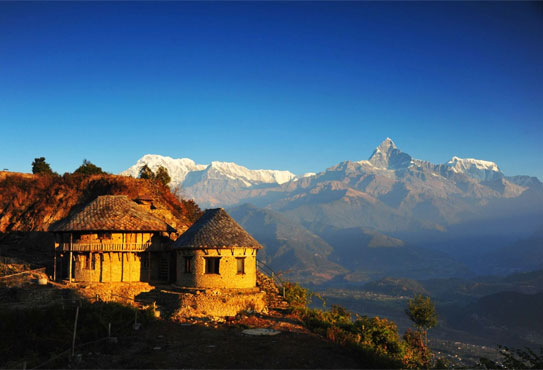
After the visit and lunch, leave by road toward Nagarkot, at an altitude of 2,099m and 32km east of Kathmandu or 19 kilometers northeast of Bhaktapur. Nagarkot is one of the most beautiful hill resort areas to enjoy sunrises and Mountain Range views, from the Langtang to Mount Everest.
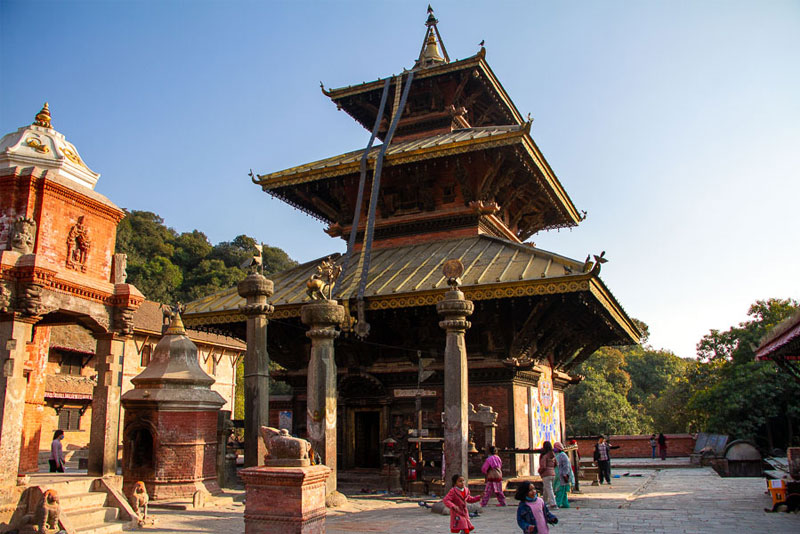
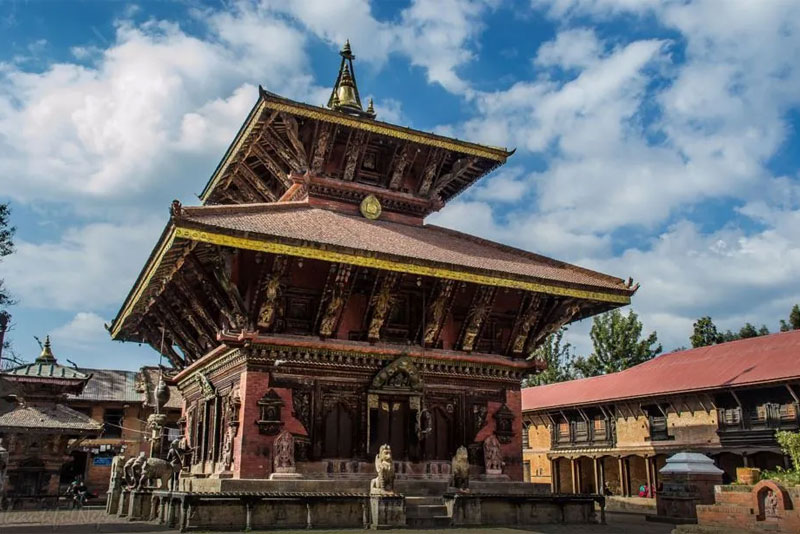
Early wake up and sunrise tour, return to the hotel for breakfast. After breakfast, drive or take a lovely hike down, according to your choice, to the Changu Narayan Temple. It is the oldest temple in the entire region or perhaps the country. The temple is on top of a hill and surrounded by Newari settlements. It is dedicated to Vishnu and is considered amongst the oldest temples of Kathmandu valley, and its origin is said to be a Buddhist temple.
After Changunarayan, drive to Dhulikhel. On the way, stop in Banepa to visit the famous temple of the goddess Chandeswari, the only powerful deity of Banepa. The Chandeswari temple lies 1.1 kilometres northeast of the Banepa city centre. After the visit, transfer to Dhulikhel, a scenic hill resort area near Panauti. At one time, Dhulikhel prospered as a trade hub between Kathmandu and Tibet. Today, the city charms visitors with its cultural heritage and scenic views.
Breakfast at the hotel and hike to Namo Buddha. A trip to Namo Buddha is a way to see how Nepalese people in the villages live their daily life in the incredibly steep terraced valleys. The fields are full of greenery, and the wind carries the smell of sun-heated herbs to Namo Buddha. During this short trip, You can feel that the beauty of nature embraces you, enjoying the views of the Himalayas to the northeastern horizon.
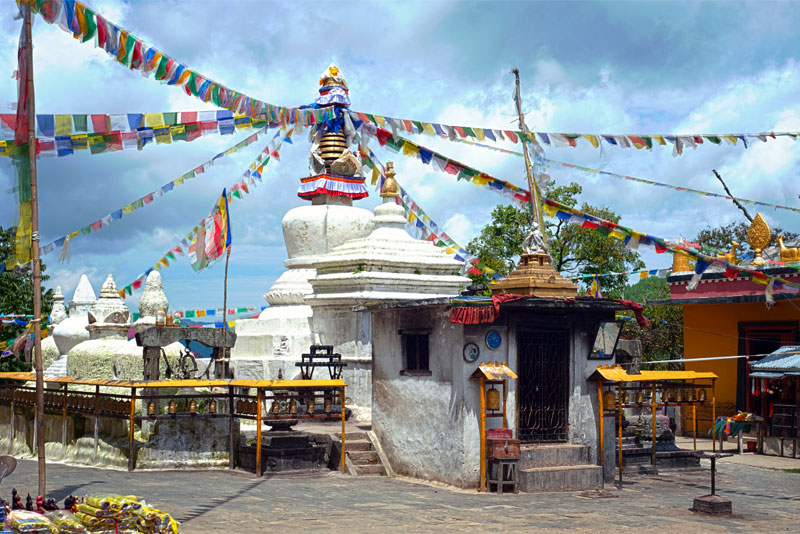
Namo Buddha, which means “greeting to Buddha”, is a sacred site that has been holy for thousands of years. Namo Buddha highlights the paranormal story of the former life of Buddha, who was touched by compassion at the pitiful sight of a tigress and her tiny cub, which leads him to offer his own body as food. The tragic story of the origin of Namo Buddha Stupa is related to the thirty-two reincarnations of Bodhisattva. The ancient name of the current Namo Buddha was Gandamala Parvat. Arrive at Namo Buddha, check into a monastic lodge and have lunch. In the afternoon, visit monasteries and the sacred site of the Namo Buddha stupa.
Breakfast at the Monastic Lodge. Then drive or hike down Panauti; both options are beautiful – inform your preference to the guide. Panauti lies at the confluence of two rivers, and the ancient name for the city was Panchal and Gunoltiavatipur. Visit several temples dedicated to several deities along the banks of the holy rivers. Thousands of pilgrims flock to Panauti for the Makar Mela, which occurs once every twelve years in honour of Lord Shiva. The city’s origin is linked to a Buddhist King Maharatha and his ancestors. Finalise with the tour and 34-kilometres drive to Kathmandu.
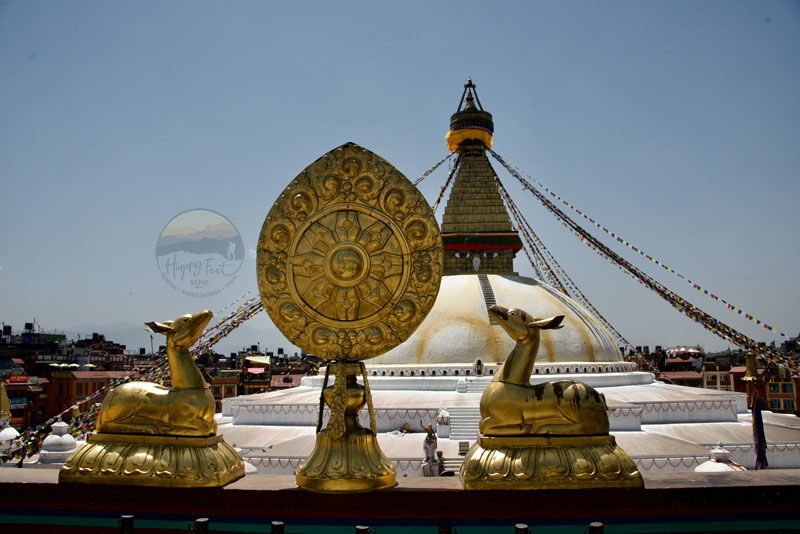
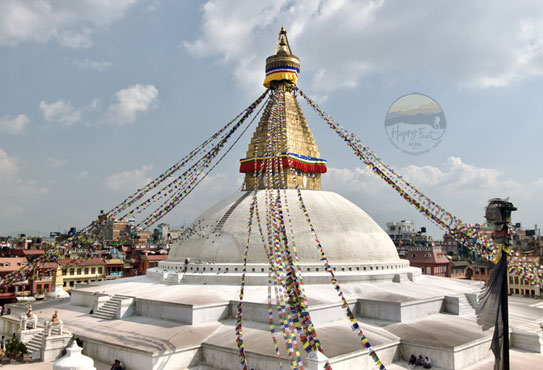
In the evening, visit the Boudhanath, the largest Buddhist shrine in the Kathmandu Valley. This ancient Chorten was built in the 5th century A.D. by King Manadeva. A series of three terraces leads up through water, fire and air segments to the pinnacle, symbolic of space and the highest spiritual attainment. The whole is surrounded by a circle of shops which form a small Tibet. Lord Buddha’s four pairs of eyes flash vividly in the cardinal directions, radiating the message of Mahayana Buddhism, known as Lamaism in Sikkim, Ladakh, Bhutan and Tibet.
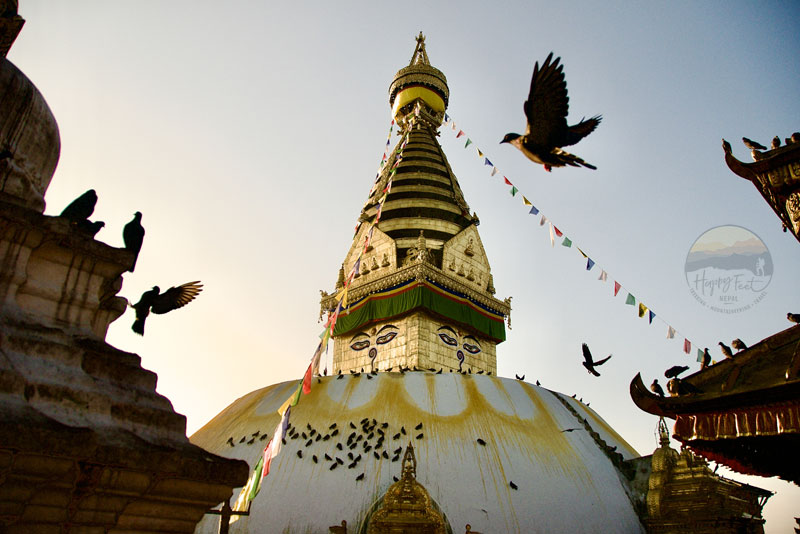
Breakfast at the hotel. In the morning, visit Swayambhunath, located on a lovely little hill to the northwest of the city centre, which is the most sacred Buddhist site. The self-originated shrine is believed to have been built in its current form around 250 B.C. The stupa, painted with a pair of the Buddha’s all-seeing eyes, stands on a lotus mandala base on all four sides. The site offers a complete view of Kathmandu Valley, its surroundings, and the Himalayas to the northeast.
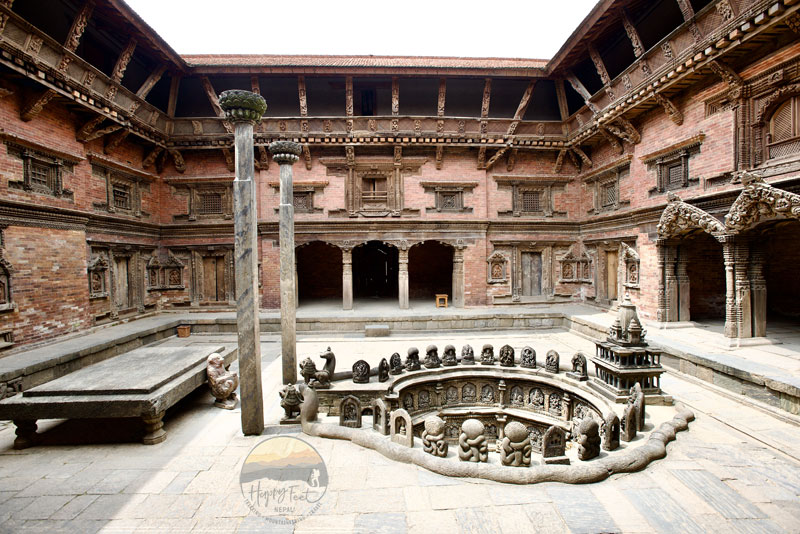
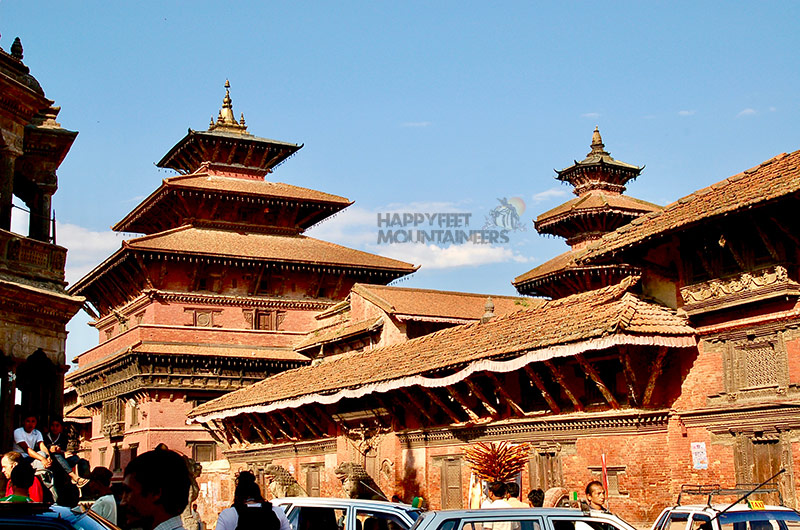
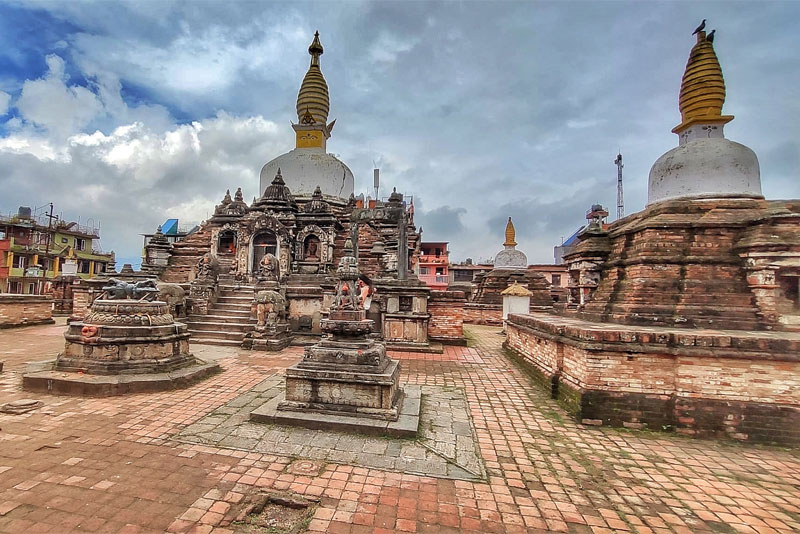
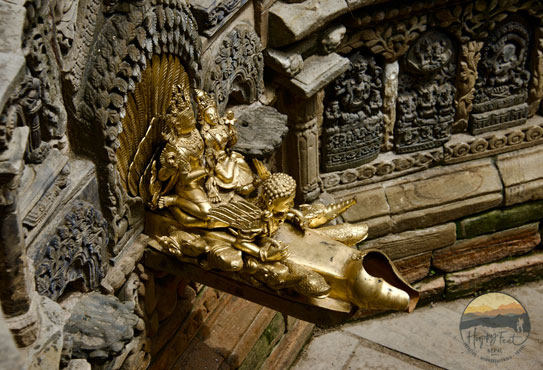
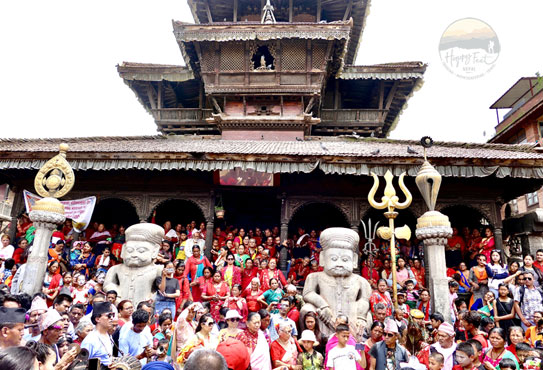
In continuation, drive to Patan, one of the three medieval cities of Kathmandu valley and one of the World Heritage sites among the seven World Heritage sites of Kathmandu valley, located 7 kilometres south-west of Kathmandu. The city of Lalitpur, the City of Arts, was a renowned Buddhist centre in Asia, with four Ashok-built stupas and a multitude of miniature stupas, monasteries, viharas, and temples. At Patan, we visit its Durbar Square, the Golden Temple, Thousand Buddha, and its museum, among other sites, which explain Buddhism and Hinduism in extensive labels within the living traditions and context.
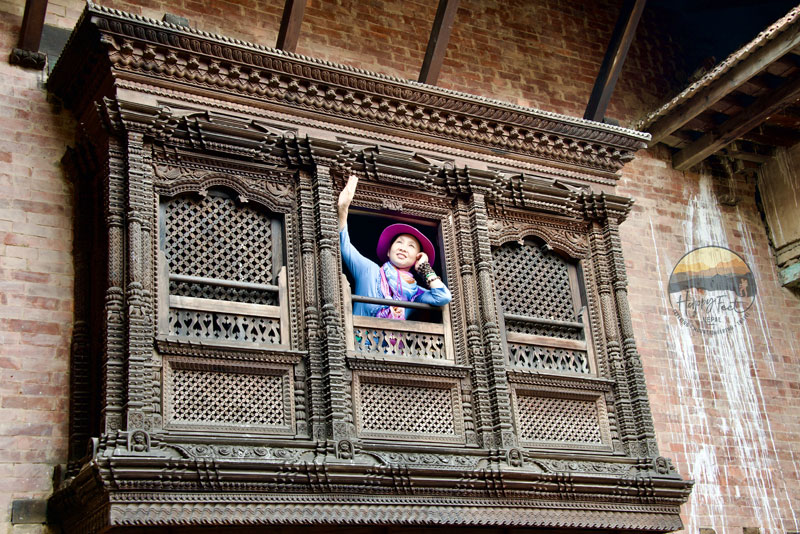
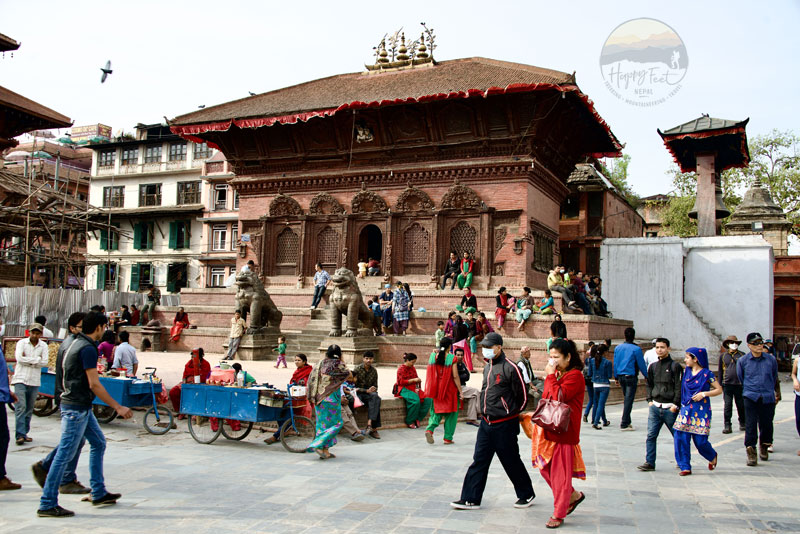
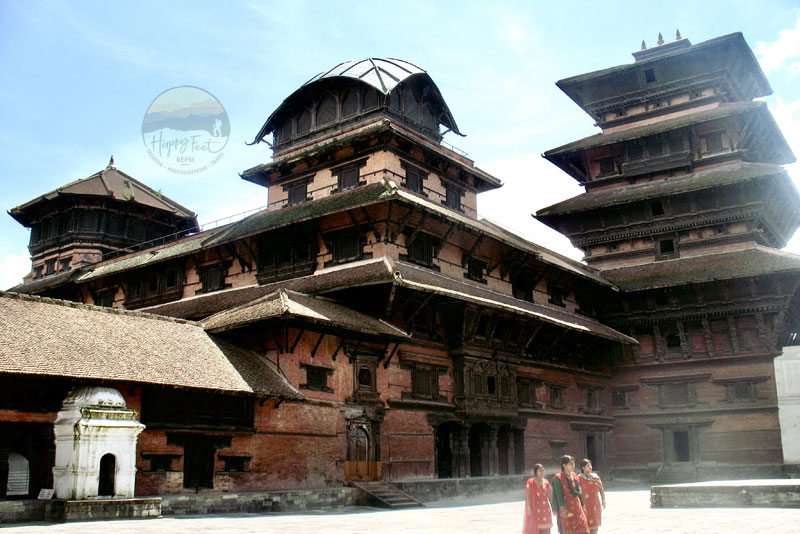
In the evening, visit Durbar Square in Kathmandu, an example of the urban architecture of the Malla dynasty, with 19-storey buildings, temples and palaces, and the residence of the living goddess Kumari. Kathmandu Durbar Square, the old palace complex that houses a mass of temples and palaces, including the Gaddi Baithak Durbar, constructed in 1908; the Basantapur Durbar, or the old Royal Palace; and the Kumari Chowk, the residence of the Living Goddess. Basantapur is amongst the most attractive sites in the bustling centre of Kathmandu, and a western traveller around two hundred years ago wrote that there were more temples than houses and idols than people in its city. Lying at the heart of Kathmandu, Durbar Square is a UNESCO World Heritage Site and a must-see. The individual buildings, palaces, and temples feature intricately carved doors, lattice windows, and struts adorned with mythic and erotic figures.
Finalise with a tour and a rickshaw ride through the old city market centre, the Ason Bazaar, seeing what the Nepalese people buy and sell in their daily lives.

Early in the morning, take a scenic mountain flight to enjoy the views and panorama of a 360-degree wide range of Himalayan peaks from Manaslu, Ganesh, Langtang, and Jugal Himal, Pumori, Lhotse, Nuptse, Mt. Everest and as far towards Mt. Makalu and Kanchenjunga towards far east. Most mountain flights operate early morning, from 6:30 a.m. to 9 a.m., with window seats that last an hour. You can observe a mighty chain of Himalayan peaks both ways on the flight, never missing the core and highlight of mountain flight. Get landed back at the airport and get escorted back to the hotel. The rest of the day is free on your own.
Breakfast and the rest of the day are leisure on your own. The Representative of Happy Feet Nepal will arrive at your hotel with transport three hours before your departure flight time. Get escorted from the hotel to the International Departure Terminal, see off formalities, and go through the immigration and departure.
Nearly all months of the year except for the monsoon (mid-June to mid-September) are suitable. However, the best period is from March to May; most days remain clear, and hills are alive with wildflowers in full bloom, especially the rhododendron in its various colours (Nepal’s national flower).
September to December, the autumn and the beginning of winter is always the best time to visit Kathmandu or the whole country. Most days are fine, and skies are clear, offering breathtaking views of peaks, but with dwindling sunlight hours, when temperatures can drop to freezing.