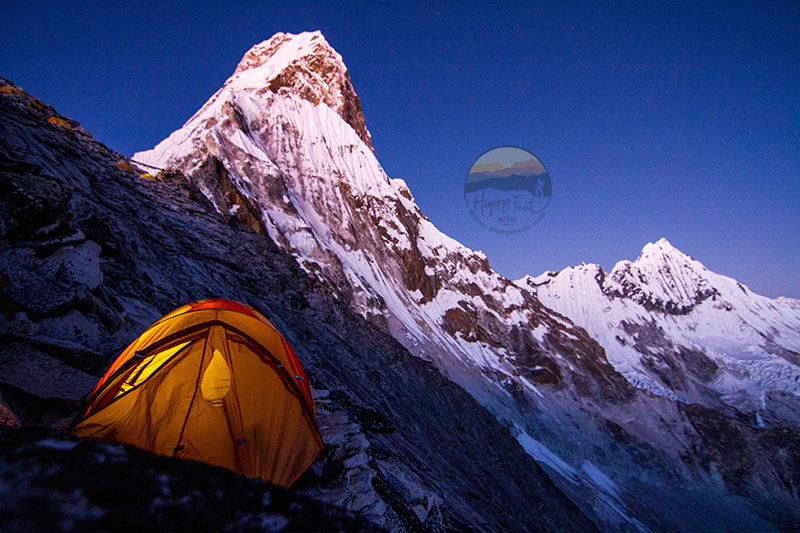
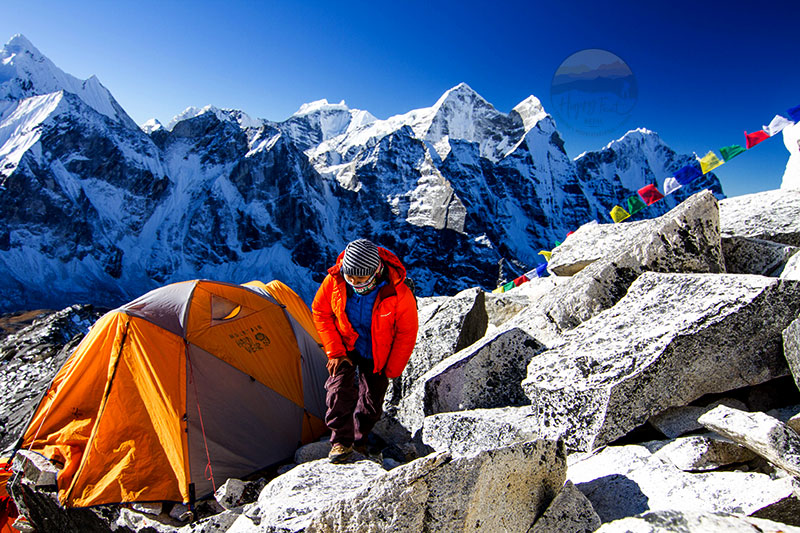
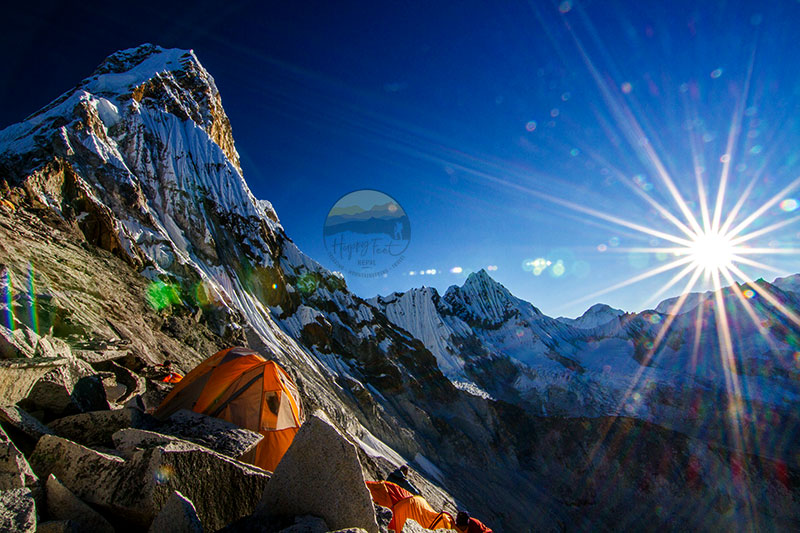
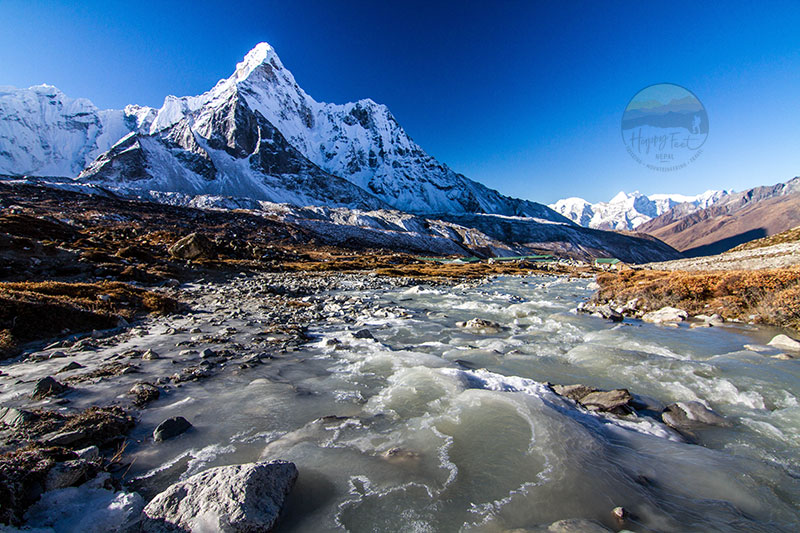
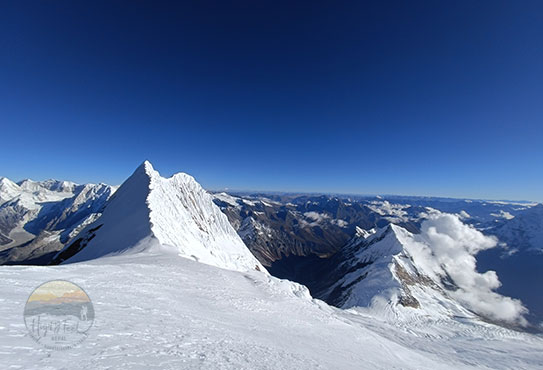
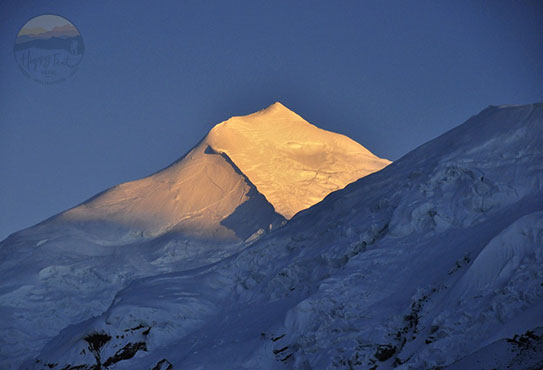
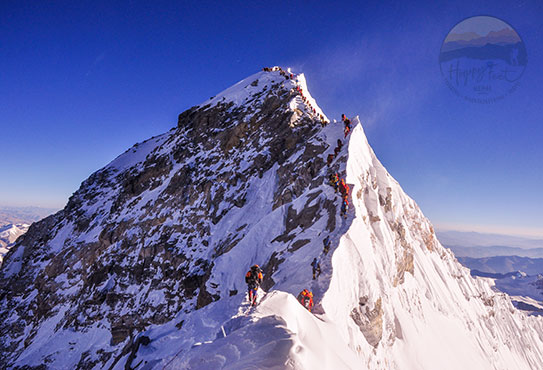
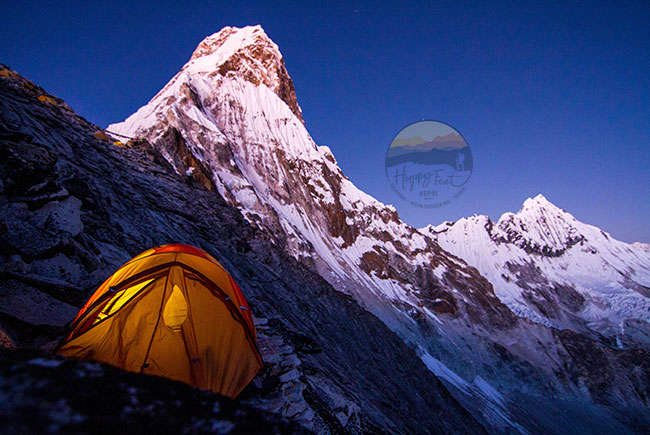
Ama Dablam Climbing Expedition is one of the fame-filled climbing activities. The Ama Dablam Himal is a beautiful mountain in the Himalayas range. Its height is medium, 6812 meters, and the technical aspect of mountaineering is high, so it is a unique mountain for those who want to enjoy mountaineering. Those who climb the Ama Dablam may climb Mt. Everest, but climbing a medium 8,000-meter mountain secures Everest’s success rate and self-security.

Historical Significance of Ama Dablam
Mount Ama Dablam was first conquered on 13 March 1961 by a team of 1960-61 Silver Hunt Scientific Expedition. The successful team members were Mike Gill (NZ), Barry Bishop (USA), Mike Ward (UK), and Wally Romanes (NZ). Their successful ascent route was via the Southwest Ridge, and Sir Edmund Hillary led them.

Journeys to Ama Dablam Base Camp commences
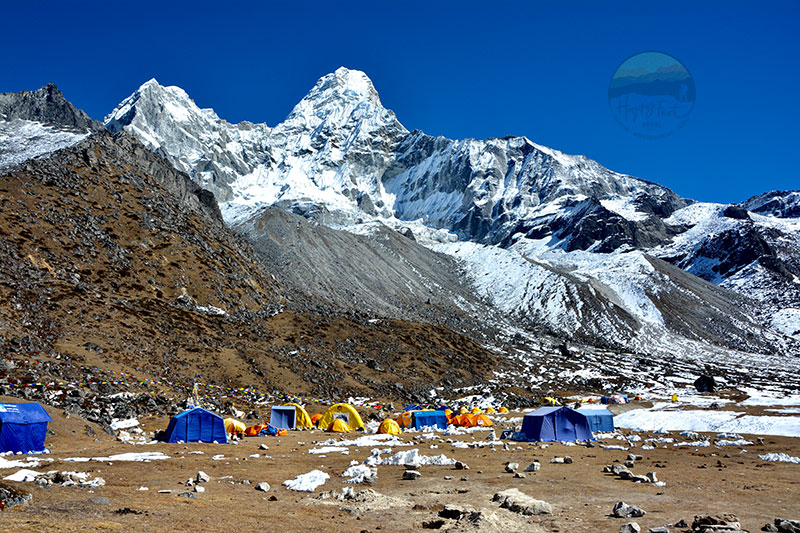
The journey to Ama Dablam base camp commences with a short domestic flight to Lukla. From Lukla, the Ama Dablam base camp reaches over a six-day acclimatizing trek through the Sherpa villages of the Khumbu region.

Cultural Experience On the way to Ama Dablam Base Camp
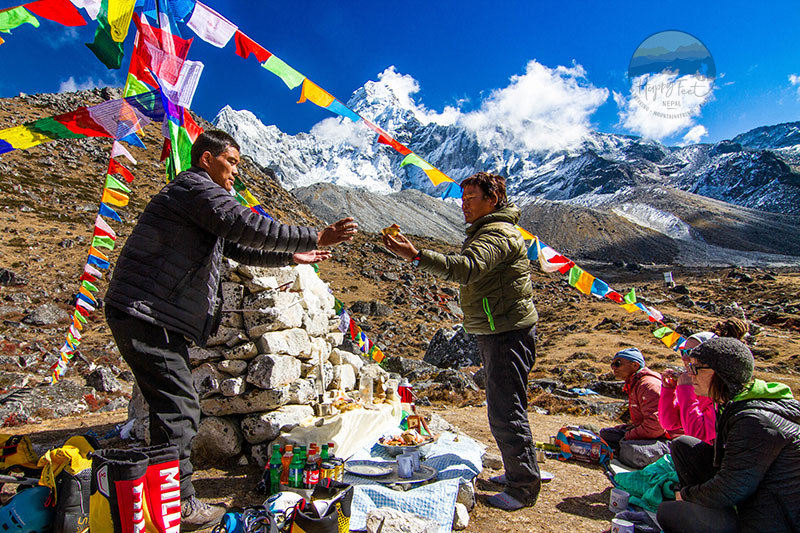
On the way to Ama Dablam Base Camp, climbing groups stop at Pangboche Village, one of the ancient villages in the Khumbu Valley. They visit its monastery and pray for a peaceful and safe expedition for all members. We also request a puja ritual from the Monks at the monastery to solicit the local deities for an obstacle-free expedition and continue walking up to base camp. The final Puja ritual is celebrated for all expedition members and equipment taking on the mountain at the Ama Dablam base camp.

Ama Dablam Climbing Preparations
Once the puja ritual is performed, the climbing Sherpa guides begin transporting climbing equipment, high-altitude food, and other supplies to the higher camps. The climbing members accompany them to advanced camps, camps one and two, to acclimate to the climb. After three to four days of acclimatizing climb, the ascent to the summit begins following routine procedures. The summit is mainly attempted from Camp Two, with a probability of setting Camp Three in Dablam. Read more for pre preparations.

Ama Dablam Expedition Details
The expedition departs from the end of September to November, and the cost per person is 4,000 USD for joining at the Base Camp to Ama Dablam summit and back to Base Camp, or 6,500 USD Per Person for the full Kathmandu to Ama Dablam and back journey.

About Ama Dablam Climbing Expedition

Mount Ama Dablam, standing at 6,812 meters (22,349 feet), is one of the most beautiful mountaineering peaks in the Himalayas. It is located in the Khumbu region in Nepal and is often referred to as the “Matterhorn of the Himalayas”. Its beautiful pyramid shape and sharp ridges make it a favourite among climbers and trekkers.

The name of Ama Dablam translates from the Sherpa Language the “Mother’s Necklace,” which symbolizes the sacred nature of Mount Ama Dablam within Sherpa culture. The attractive features of Ama Dablam are its steep faces and sharp edges, which present considerable challenges for all grades of climbers.

Ama Dablam is famed for its climbing routes and breathtaking scenery. Surrounding valleys are adorned with lush forests, glacial lakes, and traditional Sherpa villages that offer rich cultural experiences. Trekkers to Everest base camp pass through these landscapes and enjoy the views of Ama Dablam from nearby trails, and many of them promise to return and try to climb.

Climbing Ama Dablam requires technical skills due to its mixed rock, ice, snow slopes and terrain. The standard route involves ascending via the southwest ridge, where climbers encounter challenging sections, including steep rock and ice walls and exposed ridgelines.

Due to its beauty and accessibility, Mount Ama Dablam has become popular among climbers seeking adventure and tourists looking to experience the majesty of the Himalayas without attempting extreme altitudes. The mysterious fascination of Ama Dablma Mountain continues to attract adventurers from around the globe while serving as an imposing grandeur in front of Everest, Lhotse, and Nuptse.

Climbing Routes of Ama Dablam
The southwest ridge of Mount Ama Dablam is considered the “standard” climbing route due to its relatively established routes and camps. The climbing duration is 5 to 7 days from base camp to summit and back down; the time may differ depending on acclimatization, climbing schedule and climbing speed. The Ama Dablma southwest ridge route is the most popular choice for all climbers, and the key reasons are as follows.

Established Path: The southwest ridge features fixed ropes and well-defined paths from previous ascents, which help guide climbers through technical sections.

Moderate Difficulty: The Ama Dablam southwest ridge route is still challenging and offers manageably difficult rock and ice climbing.

Logistical Support: Base camp access via the main trekking routes is easier for logistics supplies and support teams than more remote or less travelled routes.

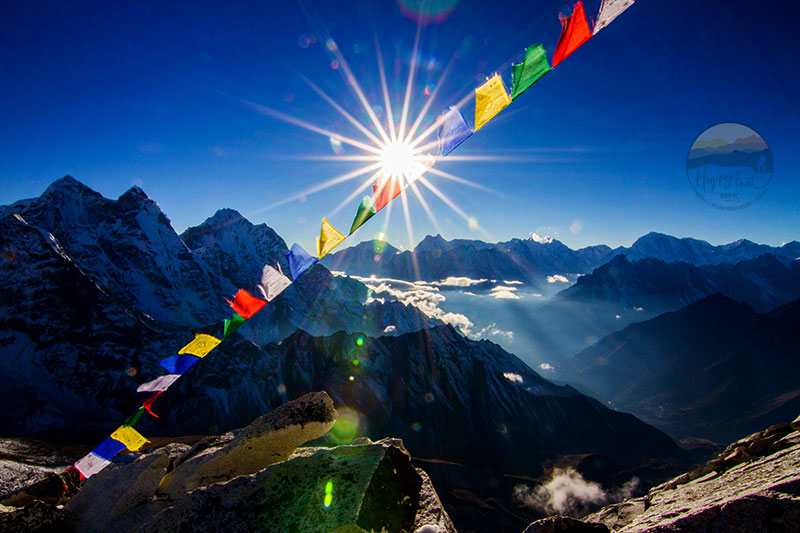
Scenic Views: Mount Ama Dablam southwest ridge climbers can enjoy the widest and most beautiful views of surrounding peaks, landscapes and Sherpa villages throughout their ascent day and night.

Other options for ascending Ama Dablam include:

North Face Route of Ama Dablam
This route involves steep ice walls, complex crevasses, and very little navigated information. It offers high-grade challenges, demands advanced technical skills and is well-prepared for exposure to high-altitude conditions. Compared to the Southwest Ridge Route, this route requires an additional 4 to 5 days for a round trip due to its complexity, difficulties in navigation through crevasses, etc. In general, climbers are required to spend 9 to 12 days in total if they attempt this route.

East Ridge Route of Ama Dablam
Less climbed than the Ama Dablam southwest ridge route. The Ama Dablam east ridge route option involves technical difficulties but can provide a unique perspective of the features of Mount Ama Dablam.

West Face Route of Ama Dablam
A rarely attempted route due to its difficulty and lack of established routes. It is suitable only for highly skilled climbers looking for an adventurous and record-breaking challenge.

All the above alternate routes offer different experiences but require greater expertise and preparation than the standard Southwest Ridge Route.

Arrive in Kathmandu, clear customs and immigration formalities, and claim your baggage, which takes some time. Upon arrival, receive a traditional welcome from a Happy Feet Mountaineers representative, then transfer to the hotel. Arrive at the hotel, and the rest of the day is free, with optional excursions (not included), or you can ask to organize any of the tours or stroll through its vibrant streets.

Kathmandu, the capital and heart of the country, is home to three medieval cities that symbolize everything in Nepal. Having lived through several Buddhist and Hindu ruling dynasties, the culture and society of Kathmandu Valley have evolved to give it more than just a unique feature. Today, it is an urban city, still rapidly growing, with its ancient myths and testimony to the greatness of the people who have lived there for time immemorial.

A completely free day to do last-minute shopping and repack the bags to base camp properly. This evening, you will need to hand over your bags to Base Camp for cargo to Lukla and then by porter to Ama Dablam Base Camp. The mountaineering team leader will need to go to the Department of the Ministry of Tourism to sign the document related to the mountaineering permit and responsibilities.

A 40-minutes’ flight and 3-hour trek.

Breakfast and take a short drive to Kathmandu Airport to board the domestic flight to Lukla. A 40-minute morning flight takes you to Lukla, with grand views of Himalayan peaks. You will be greeted by an excellent mountain panorama from the very first step at the Lukla airport, with cool air that lets you feel the atmosphere. Spend about an hour over tea/coffee and hand over our luggage to the porters. Then, take on a short introductory walk while the porters prepare their load. After spending an hour, start the trek with great excitement.

Start trek through the village of Lukla, gets checked with Khumbu Pasang Lhamu and TIMS permits at the end of the town, and exits from the village with immediate walking down through a forest facing northwest with welcoming views of Mount Kongde (Dudh Kunda Mountains) in front. After about a twenty-minute walk, the trail traverses to Chhoplung, passing the village and the School of Chauri Kharka (Chauri is a female yak, and Kharka means “shed ” in Nepali), The largest and ancestral village of Lukla, until the construction of Lukla Airport, was pastureland. After a short traverse, join the trail from Jiri to Everest Base Camp at Chhoplung, a hamlet of Sherpas. From Chhoplung, there is a level trail with short descending and climbing and traverses several villages, including Ghat. The views in front include Phakdingma, the Dudh Koshi River Valley, and Kwangde Mountain. Most of the houses on the trail and in the villages are lodges and restaurants for travellers. Finally, cross several beautiful villages, including Ghat, and arrive at Phakdingma, on the bank of the Dudh Koshi River.

Trek to Namche Bazaar, following the Dudh Koshi River to Monjo for lunch (Sagarmatha NP entrance). Afternoon climb to Namche. Day 5, acclimatisation in Namche (3500m). Optional hikes to Thamo village or the Everest View Hotel. Day 6, hike to Khumjung (3790m) via Everest View Hotel. Visit Khunde village. Day Tengboche (3867m). Scenic trail via Phortse Tenga. Visit Tengboche Monastery. Trek to Pangboche and on day 10, trek to Ama Dablam Base Camp (5364m).

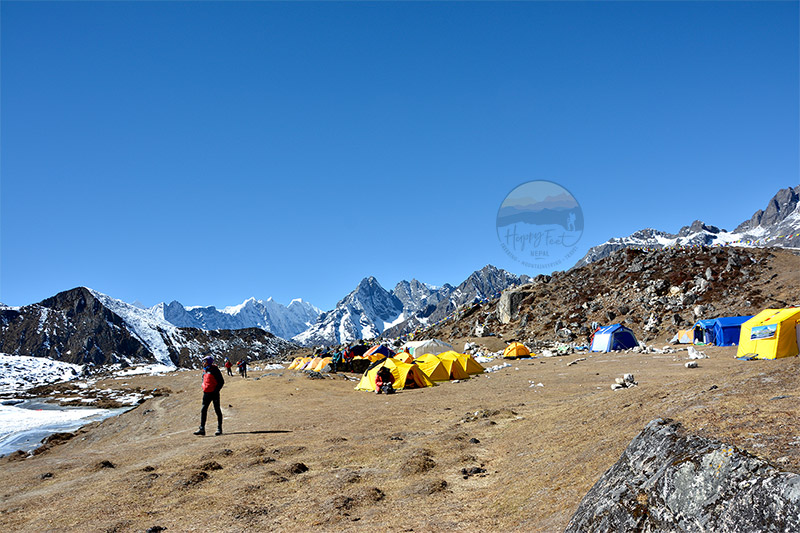
You will stay at base camp for two days for rest, meetings, and the final puja ceremony for all expedition members, the guide, Sherpa climbing guides, and all equipment taking on the mountain. A monk from Pangboche village is invited to a puja ritual to solicit the local deities for a peaceful, obstacle-free expedition.

Climb BC to ABC. Climb ABC to C1. Climb C1 to C2. Climb C2 to the summit and back to C2 – 10-hours.

A 6-hour Trek.

Descend to Pangbcohe village and take lunch. After lunch, you will set off for Phortse, a beautiful Sherpa village. Tourists are less frequent in this part of the trail, so the chances of seeing wildlife and birdlife are high. From Phortse or along the entire trail, views of Ama Dablam, Tengboche, Kusumkangru, Khumbila, Khumjung, Kongde, and the Dudh Kosi valley. Phortse village has a monastery and a mountaineering school, and it is opposite Tengboche meadow to the west, where the two can view each other. From Phortse, there are trails to Gokyo, Tengboche, Pangboche, and Khumjung.

Stop at Phortse for a refreshing drink, then trek to Phortse Tenga, crossing the river from Gokyo valley, fed by the Ngozumba glacier, which merges with the river from the Khumbu glacier at Pungi Tenga, where we took lunch on the way to Tengboche. A short walk reaches a junction to Gokyo and Namche/Khumjung, and the trail traverses a narrow valley with a steep climb to Mongla. Mongla is a small hill ridge with a stupa, some teahouses, and an extraordinary view, including Tengboche and Phortse villages, Everest View Hotel, and the countless mountains in a row across the valley.

A 4-hour Trek.

Breakfast with amazing scenery, a short downhill to Sanasa, and a traverse to Namche with incredible views of the mountains and the huge Dudh Koshi valley with countless rolling hills. Have rest and lunch at Namche. After lunch, retrace the trail down to Monjo for a pleasant two-hour walk.

A 6-hour Trek.

The last day of the trek! The trail retraces through all those tiny hamlets of Sherpa people along the Dudh Koshi river valley, up to Chhoplung, with different views and perspectives. From Chhoplung, take the trail to Lukla, which passes through a thin forest and climbs a short distance above Chaurikharka. Arrive in Lukla and check into a lodge. The evening is an occasion to celebrate and to see off your porters who accompanied you until here. The porters will travel separately to Kathmandu, taking a 24-hour drive, or start another trek to Everest Base Camp!

A 40-minutes flight.

Most flights get operated early in the morning, so we must wake up early. Take an early breakfast while the guide and porters transport your bags to the airport, and take a short walk to Tenzing-Hillary airport, get checked in and flight to Kathmandu. A short scenic flight takes you to Kathmandu. Upon landing, the representative of Happy Feet Mountaineers will welcome you back and transfer you to your hotels. Get distributed to the rooms, and the rest of the day is free on your own.

The expedition team leader must visit the tourism ministry to sign the related document. Other members are free to do their last day activities. The evening gets dedicated to a farewell dinner in one of the celebrative restaurants of Kathmandu.

Breakfast and the rest of the day is leisure on your own. The Representative of Happy Feet Mountaineers arrives at your hotel with transport three hours before your departure flight time. Get escorted from the hotel to the International Departure Terminal; see off formalities, go through the immigration and departure.

Includes

  • All airport transports, as per itinerary.
  • Hotel accommodation in Kathmandu, breakfast included.
  • Flight Kathmanduto Lukla and back to Kathmandu (all tax included).
  • Ama Dablam climbing permit.
  • Sagarmatha (Everest) National Park and Khumbu Pasang Lhamu entry fee.
  • Liaison officer and all his expenses.
  • 1 member 1 climbing sherpa guide ration climbing shervice
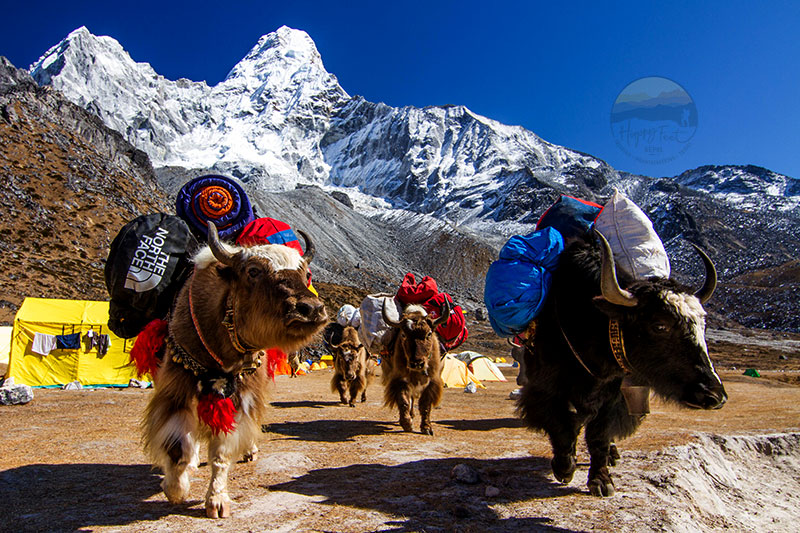
  • A required number of porters to transport the expedition material to Ama Dablam base camp and back.
  • Teahouse Lodge trek service Lukla to Ama Dablam base camp and Ama Dablam Base Camp to Lukla on a full-board basis.
  • Ama Dablam Base Camp accommodation in a lodge with or without attached toilet or tented camp.
  • Climbing rope, snow bar, rock pitons, Ice screw, carabiner etc., for group use.
  • MSR Rector cooking set and butane propane for the above base camp
  • Imported high-altitude food to use above Base Camp.
  • A satellite phone with enough recharge for emergency use.
  • Radio walkie-talkie set both for members and climbing Sherpas.
  • An emergency first-aid medical kit box + two oxygen cylinders with mask and regulator set + a Gamow bag for medicinal purposes.
  • Equipment allowance, insurance and daily wages of climbing guides, base camp staff.
  • Agency’s service charges and taxes

Excludes

  • Travel insurance (helicopter evacuation & emergency hospital treatment) is obligatory.
  • Travel insurance (trip cancellation/interruption eventualities) is not obligatory but at the client’s risk.
  • Nepal entry visa and visa fee (visa can be applied upon arrival at Kathmandu airport)
  • Lunch and dinner in Kathmandu.
  • Personal expenses
  • Alcoholic and bottled beverages during the trek and those not mentioned in the above cost include section.
  • Other charges such as usage of the internet, telephone and laundry services.
  • Summit bonus USD500 per climbing Sherpa, tips for BC staff etc.

Let us know your Experiences

Subscribe
Notify of
guest
0 Comments
Oldest
Newest Most Voted
Inline Feedbacks
View all comments

Trip Overview

Destination Everest Region
Duration 26 Days
Starts from Kathmandu
Ending Point Kathmandu
Trip Style Expedition
Difficulty Challenging & Adventurous
Best Time Spring and Autumn
Transportation Vehicles and Flights
Accommodation Hotels and Lodge
Max Altitude 6812m.
Meal BB in Kathmandu and FB on trip
Group Size 2 - 12 Pax

Inquiry Form

Customize This Trip
0
Would love your thoughts, please comment.x
()
x